A mountain goat in sacred stories
The arwiya (الأروية) is the female ibex — the wild mountain goat of the high peaks — and her entry in Al-Damiri's book opens straight into the story of the Prophet Jonah. When Jonah (Yunus) was cast ashore, the book says, GOD caused a gourd to grow over him and sent a wild arwiya that would crouch over him and suckle him with her milk morning and evening until his flesh grew back. A mountain goat, pressed into service as a prophet's nurse.
And here's a detail that stopped me: Ibn al-Jawzi, citing al-Hasan on the verse "and We ransomed him with a great sacrifice," reports that the sacrifice came from the arwiya — wild ibexes sent down to Jonah from Mount Thabir. A striking alternative to the familiar ram of the sacrifice story, with mountain goats descending from the peaks instead.
The ibex earned her place in the Prophet's own life, too. The book records that he was once gifted an arwiya while in the pilgrim state (ihram). And at Uhud, Abdullah ibn Umar described his own desperate climb up the mountain: "I was climbing like the arwiya climbs" — clambering hand over hand until he reached the Prophet. The ibex as the very image of the unscalable made scalable.
Proverbs, protection and mistaken identity
That image became theology. Al-Tirmidhi records: "Religion will cling to Medina as the snake clings to its hole, and religion will become protected in the Hijaz as the arwiya is protected on the mountaintop." The ibex on her unreachable peak — the perfect metaphor for an untouchable stronghold.
The ibex family also supplied one of Arabic's most cutting proverbs. A man named 'Awf once heard someone slip so clumsily in speech that he said the fellow had "combined the arwa with the ostrich" — the ibex lives on the mountain tops, the ostrich on the open plains; two contradictories joined. Say it when two things could not be more opposite. And because the shy ibex is glimpsed by people perhaps once in a lifetime, "like the coming and going of the arwa" became the proverb for rare acts of kindness.
But the entry's strangest legacy is a case of mistaken identity that lasted centuries. A woman named Arwa bint Uways falsely accused Sa'id bin Zayd — one of the ten promised Paradise — of stealing her land. He surrendered the land and prayed: "O GOD, if she is lying, blind her sight and make her grave in her well." She went blind, a flood exposed the true boundaries, vindicating him, and she fell into her own well and died. The people of Medina thereafter cursed their enemies with "may GOD blind him as He blinded Arwa" — and generations later, listeners heard al-arwa, the mountain goat, and concluded the IBEX was proverbially blind. A false lawsuit became a false zoological fact.
The book credits the ibex with one more marvel: a tenderness toward her young so fierce that if one is caught in a snare, she follows it and stays in the snare with it — plus the claim that it breathes through two holes in its horns, and dies quickly if they are blocked. And the khawass: mix the ibex's horn and hoof in oil, rub it on a weary traveler's body and legs, and it removes the harm of fatigue "as if he had not walked at all." The book's claim, not ours — history, never advice.
Frequently Asked Questions
-
What does the book say the ibex did for Jonah?
After Jonah was cast ashore, the book says GOD caused a gourd to grow above him and sent a wild female ibex. The arwiya crouched over Jonah and nursed him with her milk each morning and evening until his lost flesh and strength returned.
-
Why does the arwiya symbolize protection?
The article records a saying that religion would be protected in the Hijaz as an arwiya is protected on a mountaintop. The animal’s ability to reach steep, difficult terrain made it a natural image for safety in an inaccessible stronghold. Abdullah ibn Umar also compared his climb at Uhud to an ibex.
-
How did people come to think the ibex was blind?
A woman named Arwa falsely accused Sa’id ibn Zayd of stealing land, then went blind and died in her well after his prayer. A curse referring to the woman, “may GOD blind him as He blinded Arwa,” was later misunderstood as al-arwa, the ibex, creating a false zoological belief through mistaken identity.

 The Fox Came Back for Seconds 🦊🍗
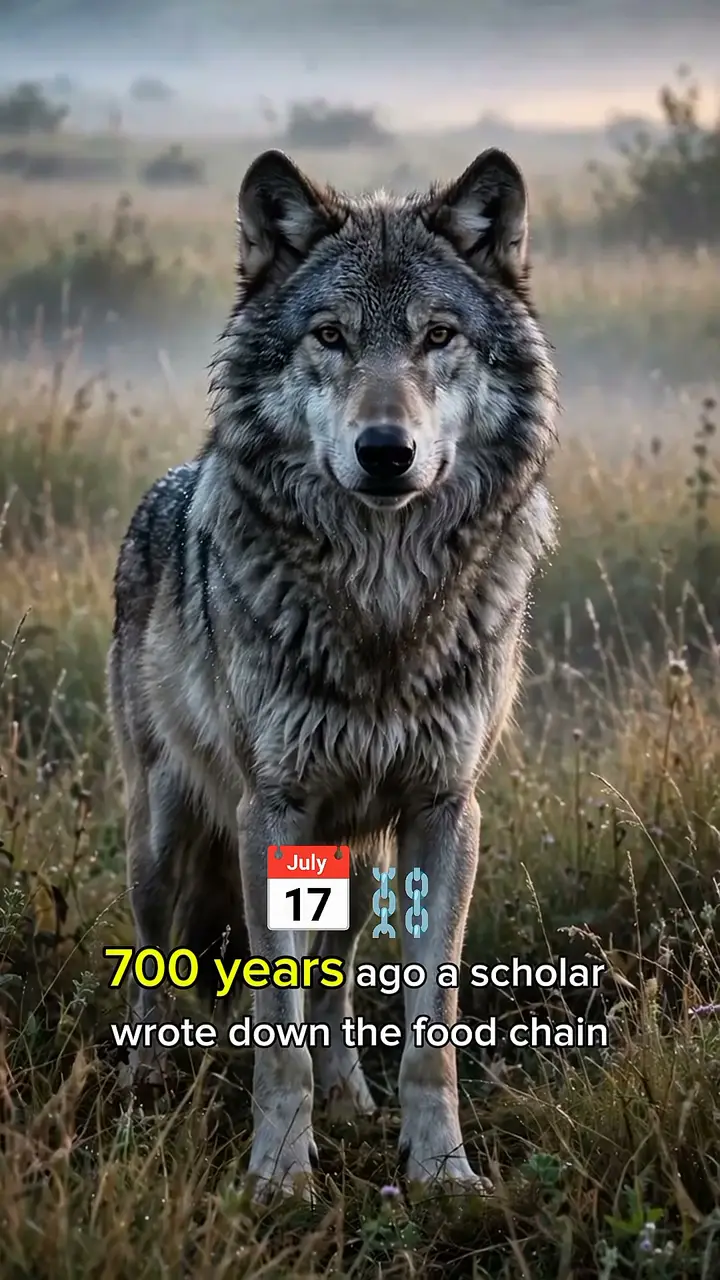 A Wolf Starts This 700-Year-Old Chain. A Fly Ends It. ⛓️🐺
 The Sneeze That Put a Cat on Noah’s Ark 🦁🐱