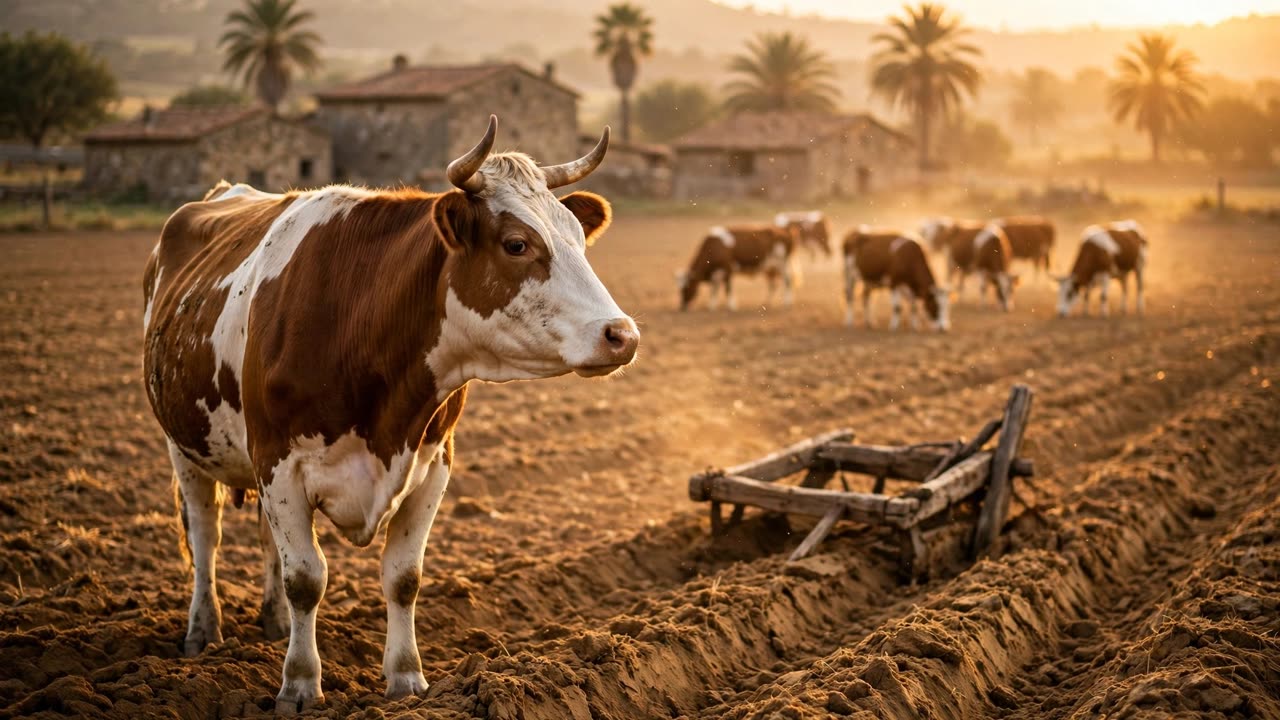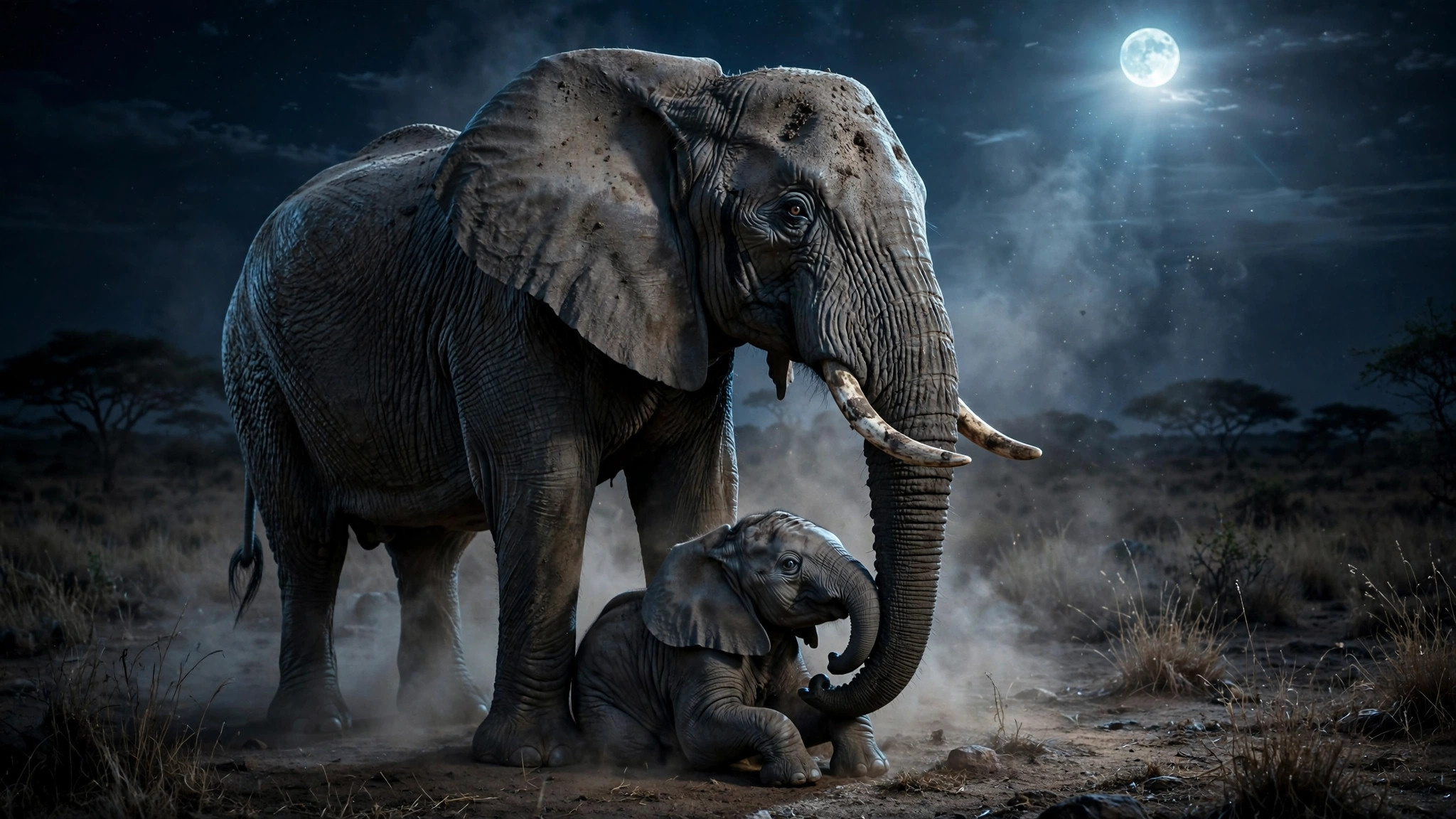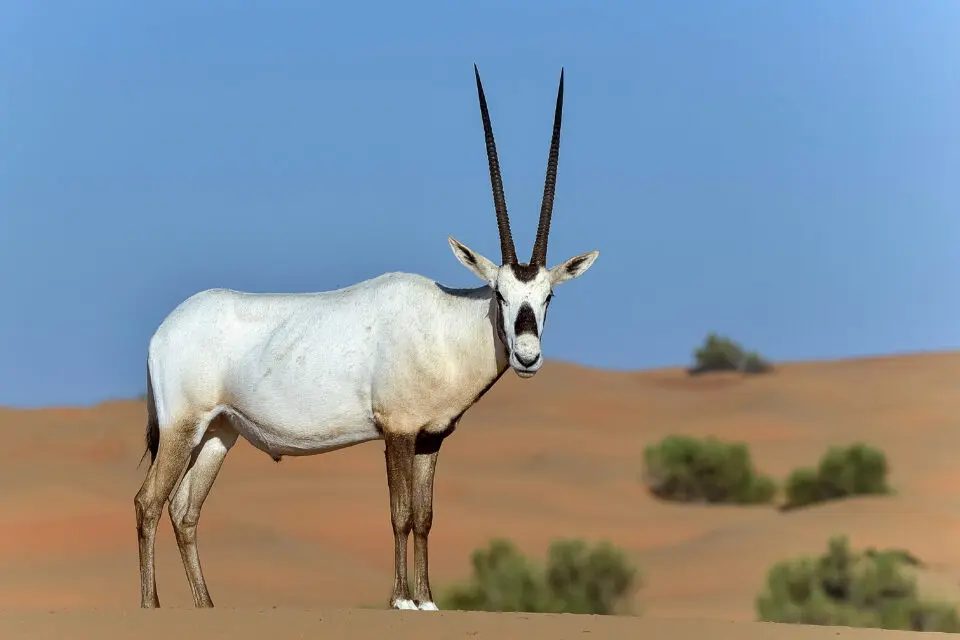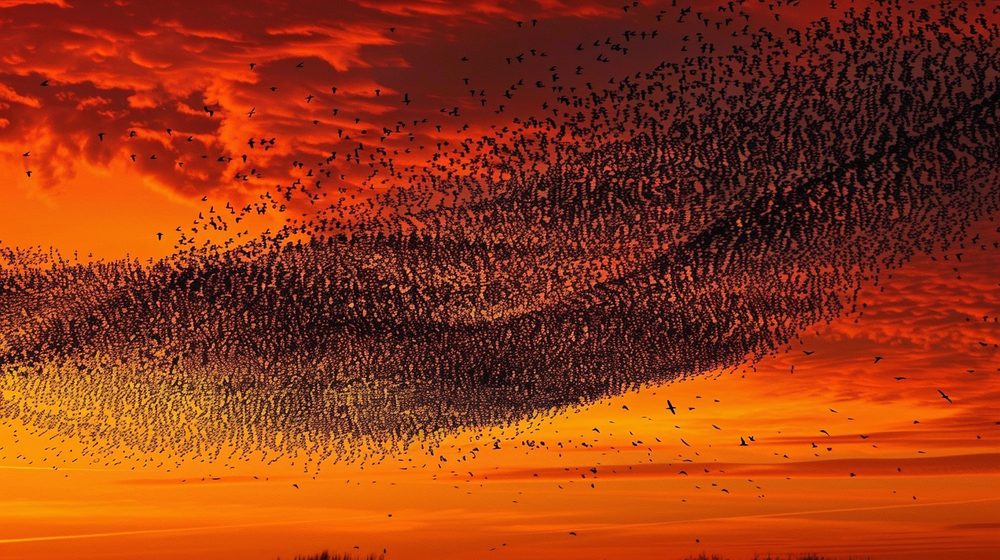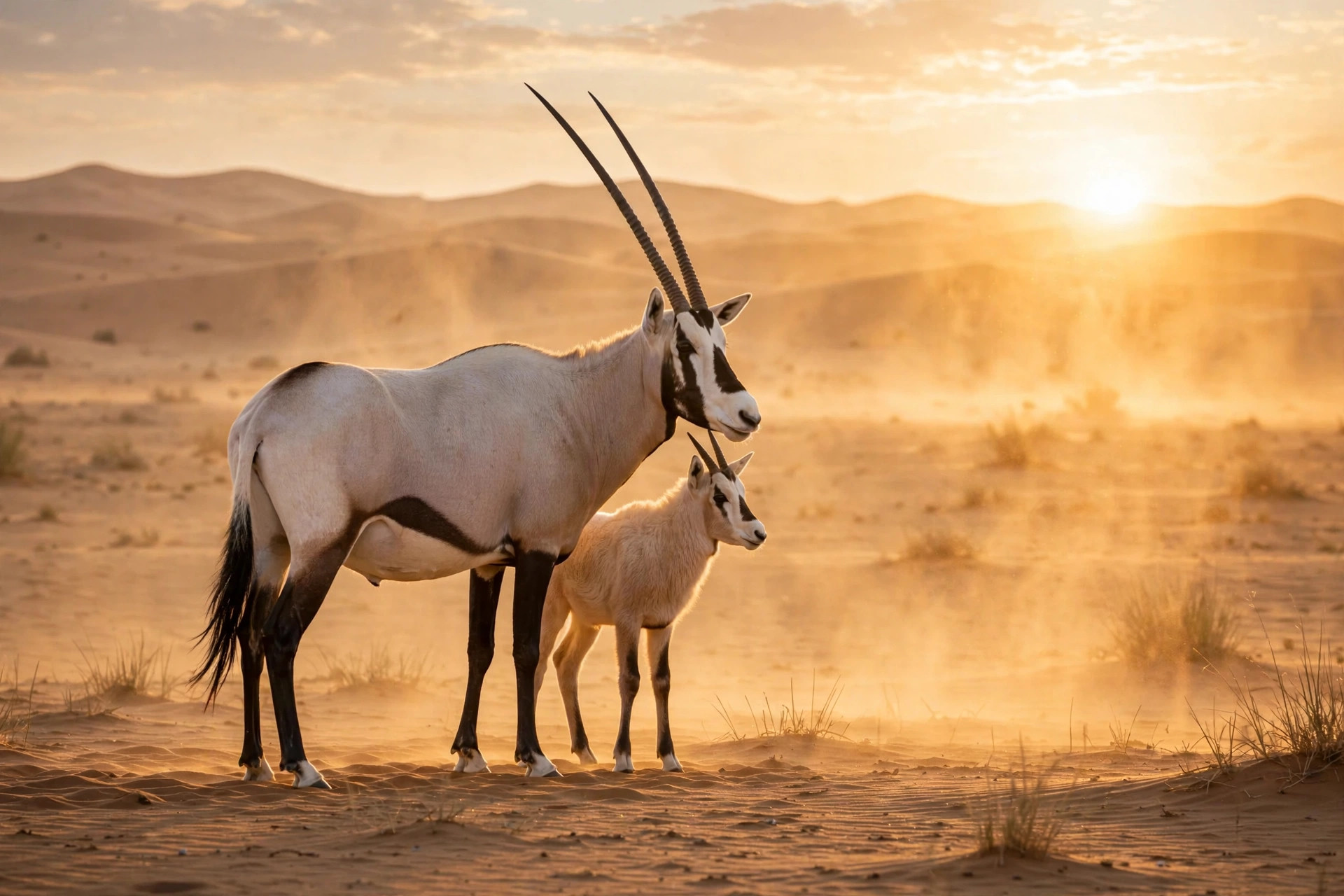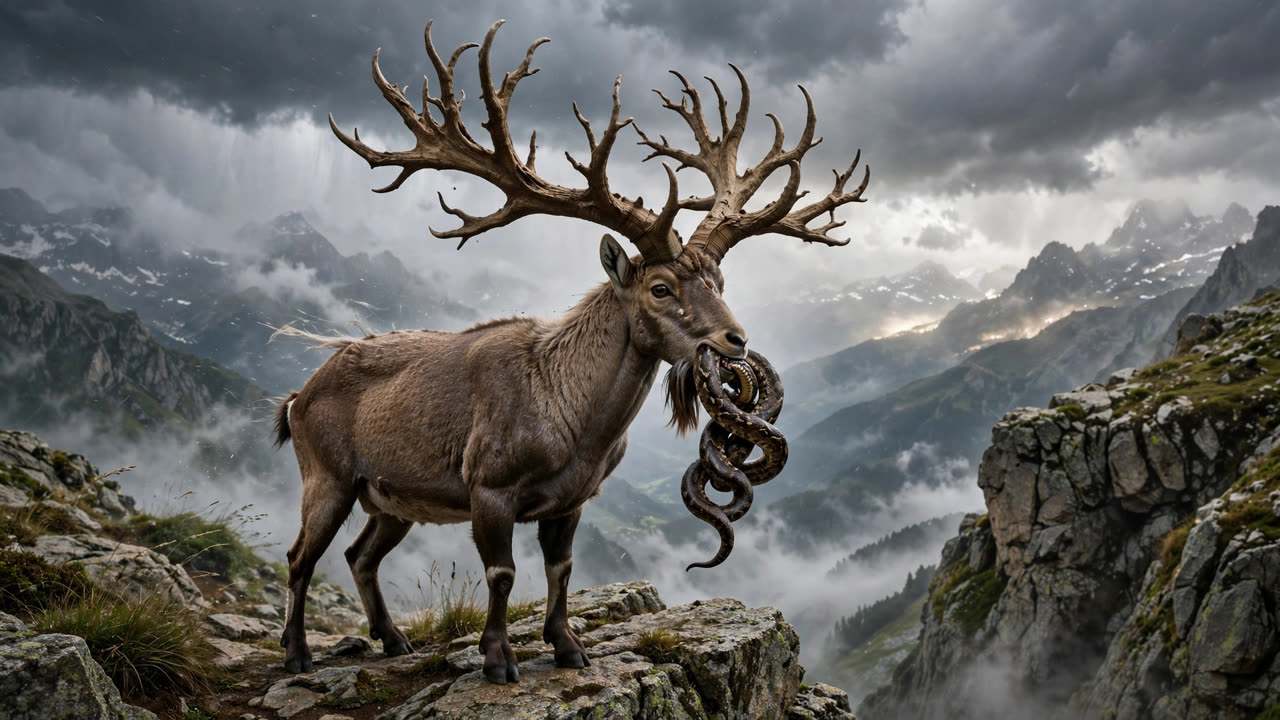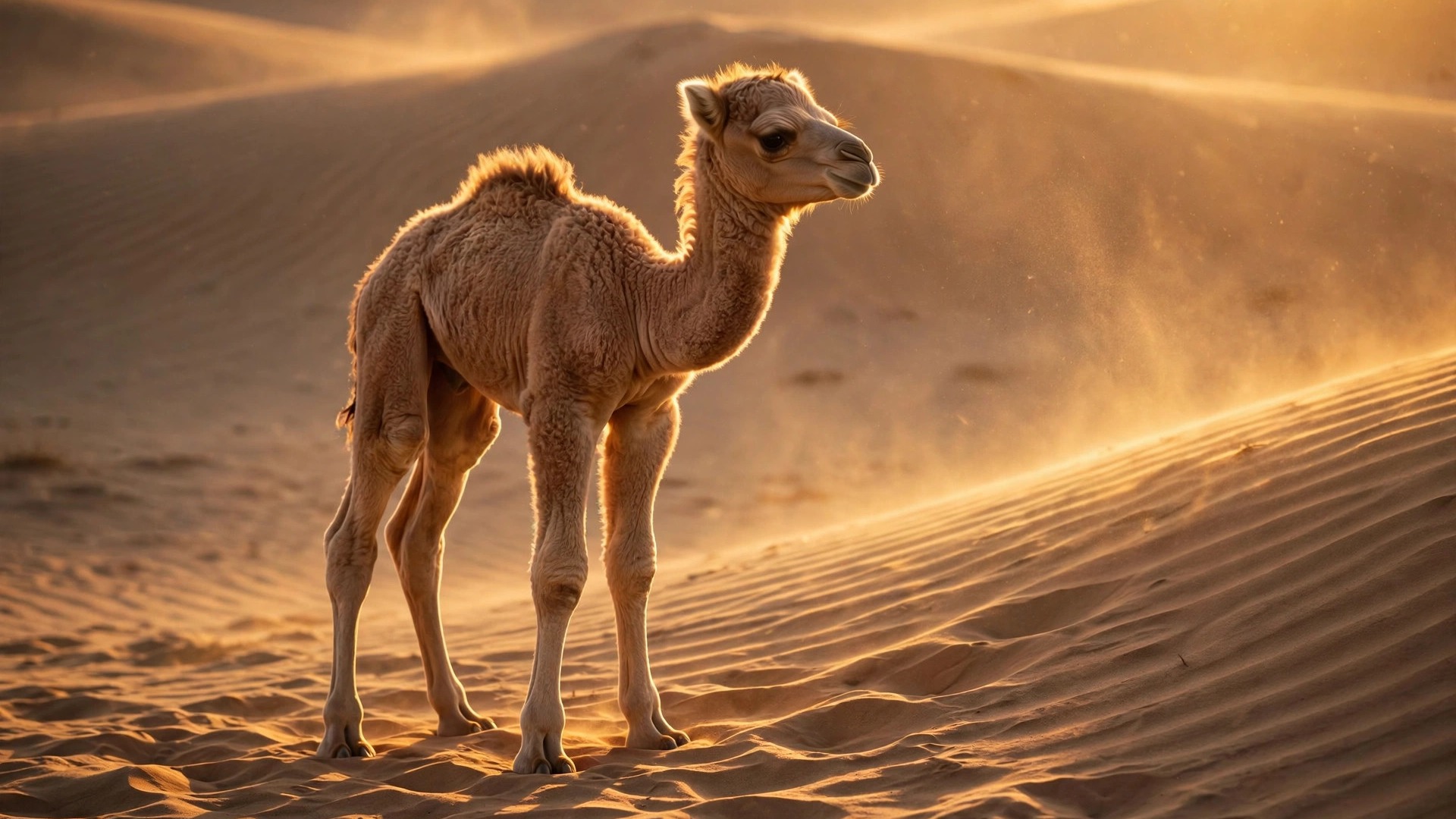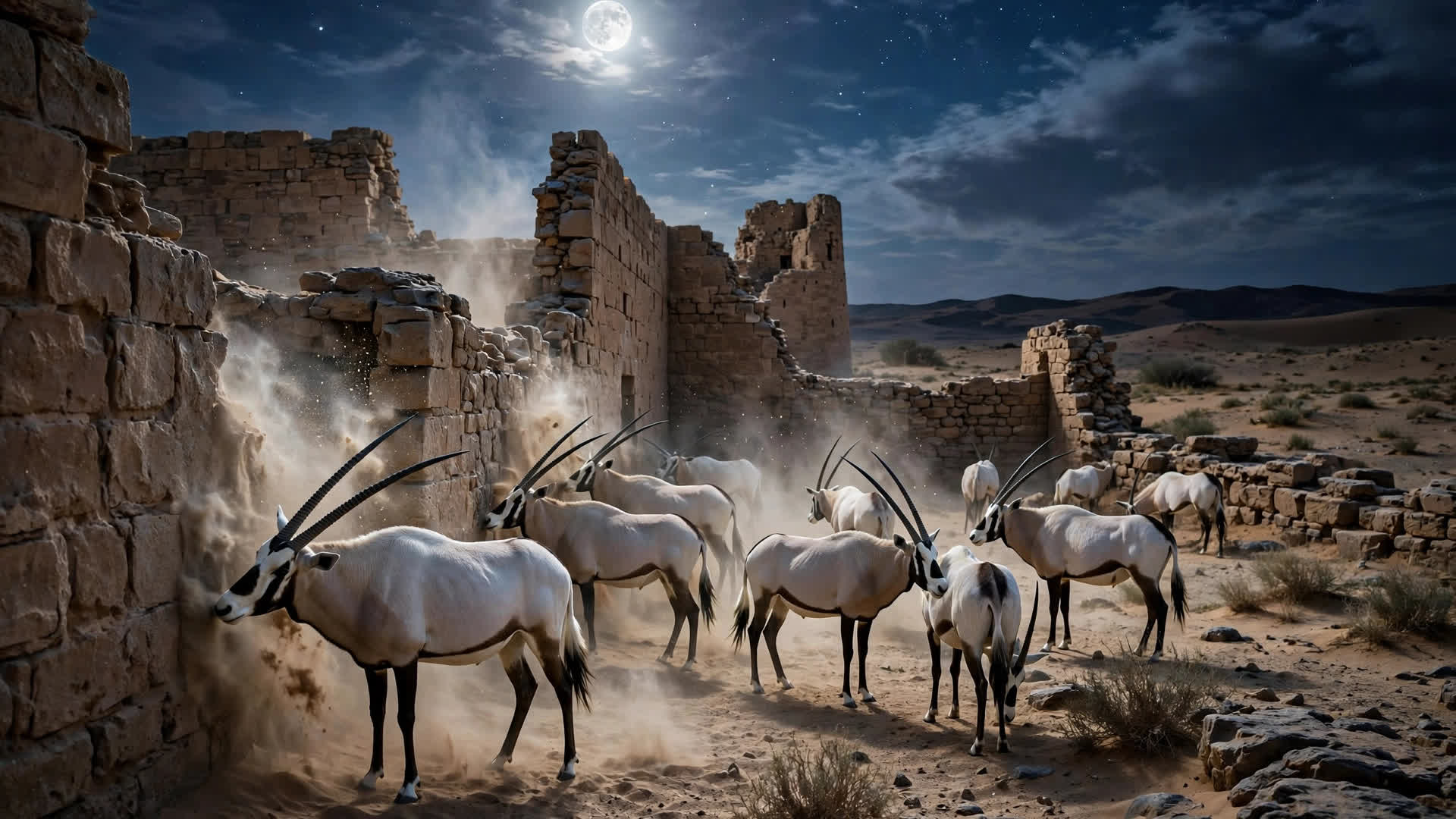
Wild Cattle (Al-Baqar al-Wahshi — البقر الوحشي): The Moonlit Herd That Captured a King
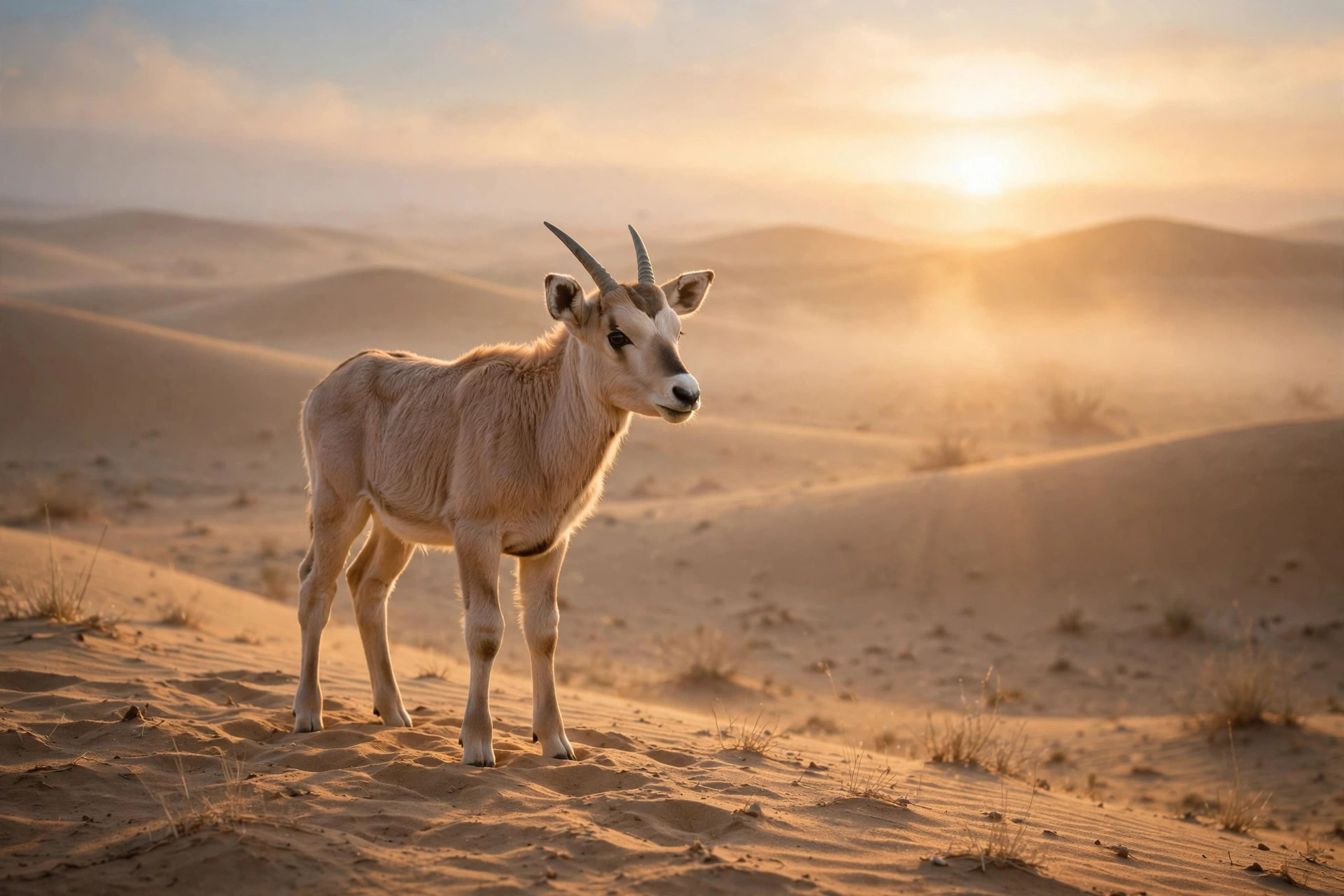
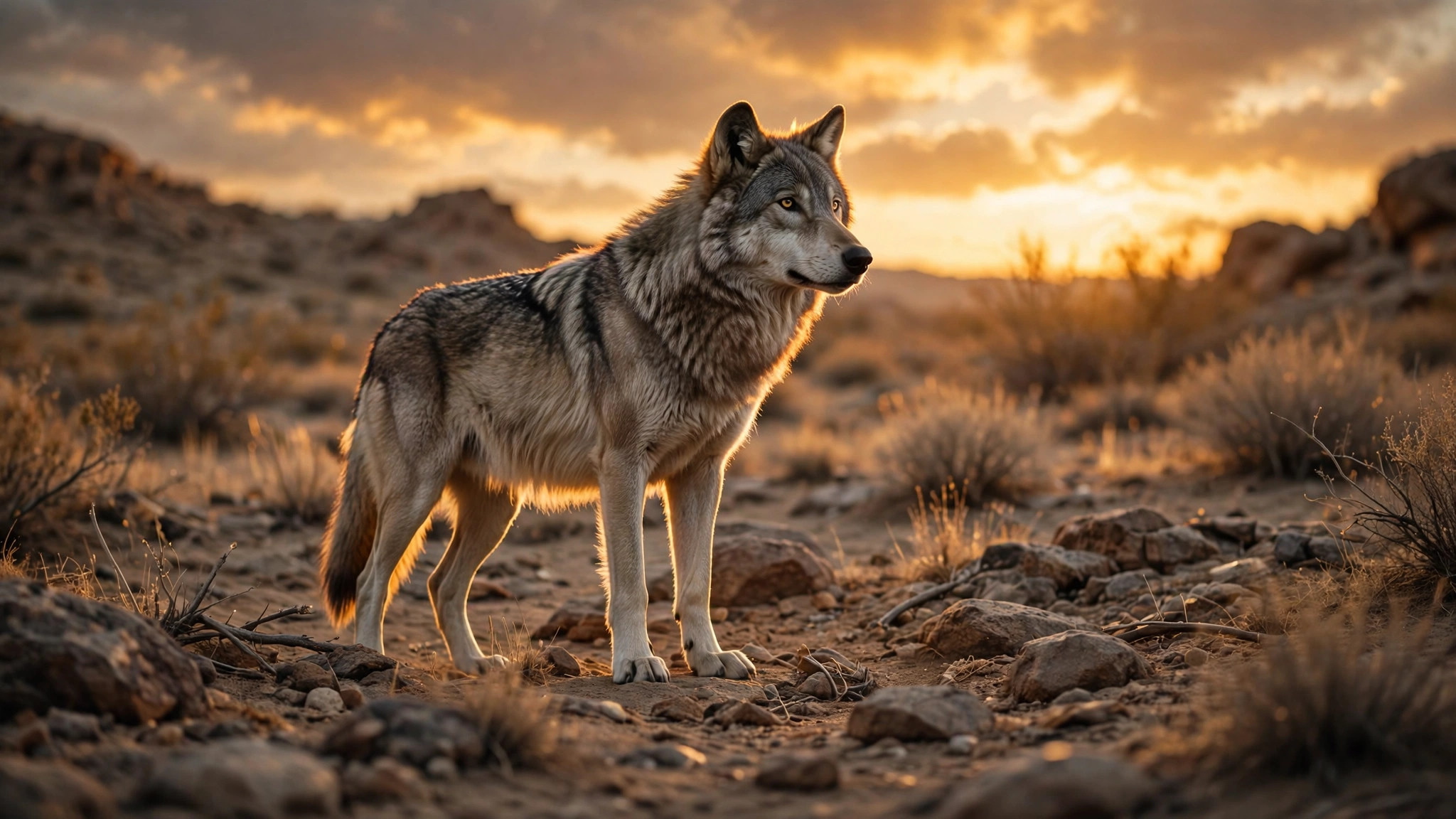
Wild cattle in Hayat al-Hayawan: the moonlit oryx herd that delivered a king into captivity, horns of solid bone, and the tiny sand 'cow'…
The complete archive — every story and article published on Strange Tale About Animals, newest first. All 76 of them are here; walk through the whole collection with the page numbers below, or search for an animal.
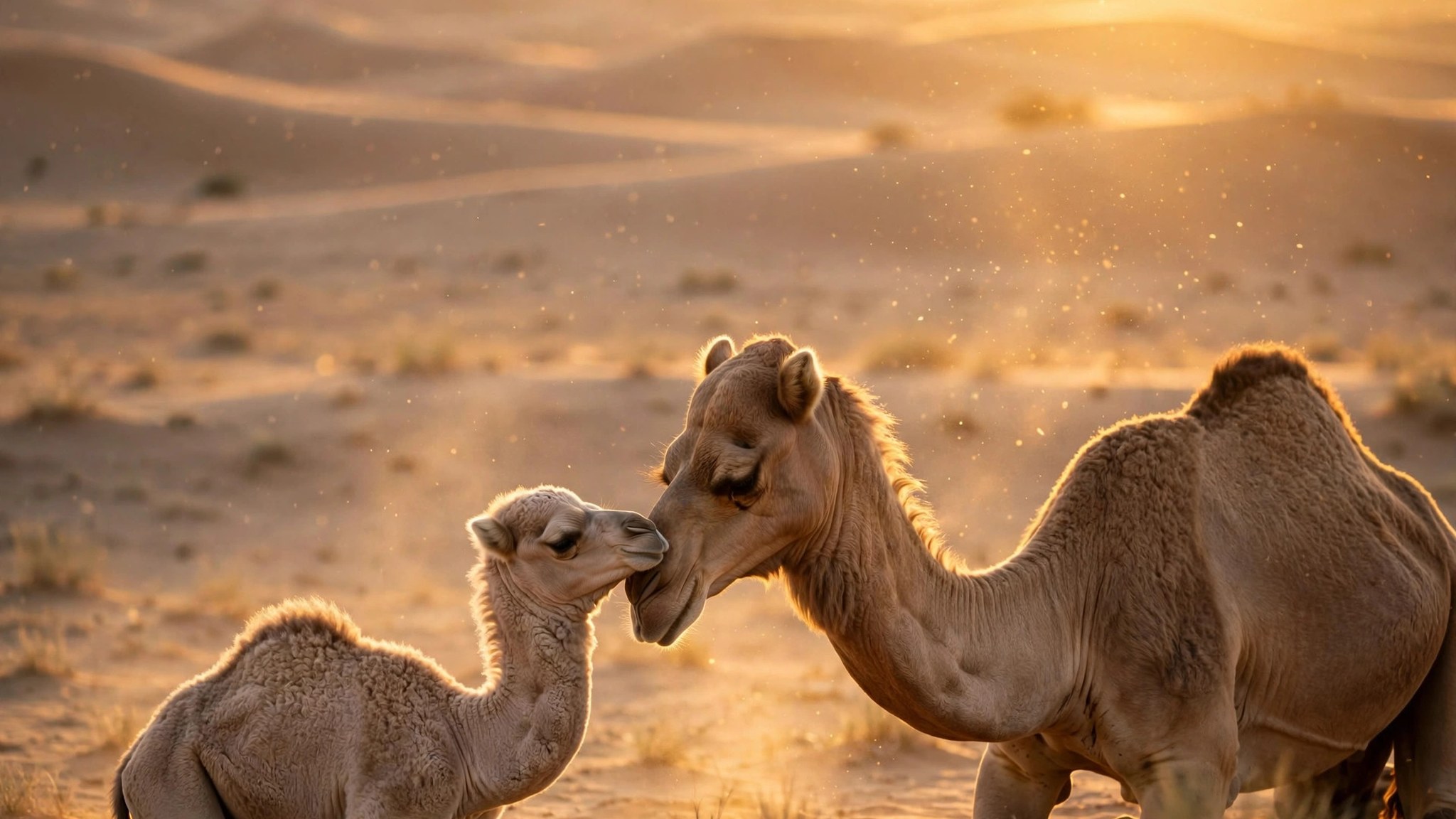
Wild cattle in Hayat al-Hayawan: the moonlit oryx herd that delivered a king into captivity, horns of solid bone, and the tiny sand 'cow'…
Domestic cattle in Hayat al-Hayawan: the famous talking cow, a greedy king whose plan dried up the milk, and the ancient rain rite of fire on cows'…
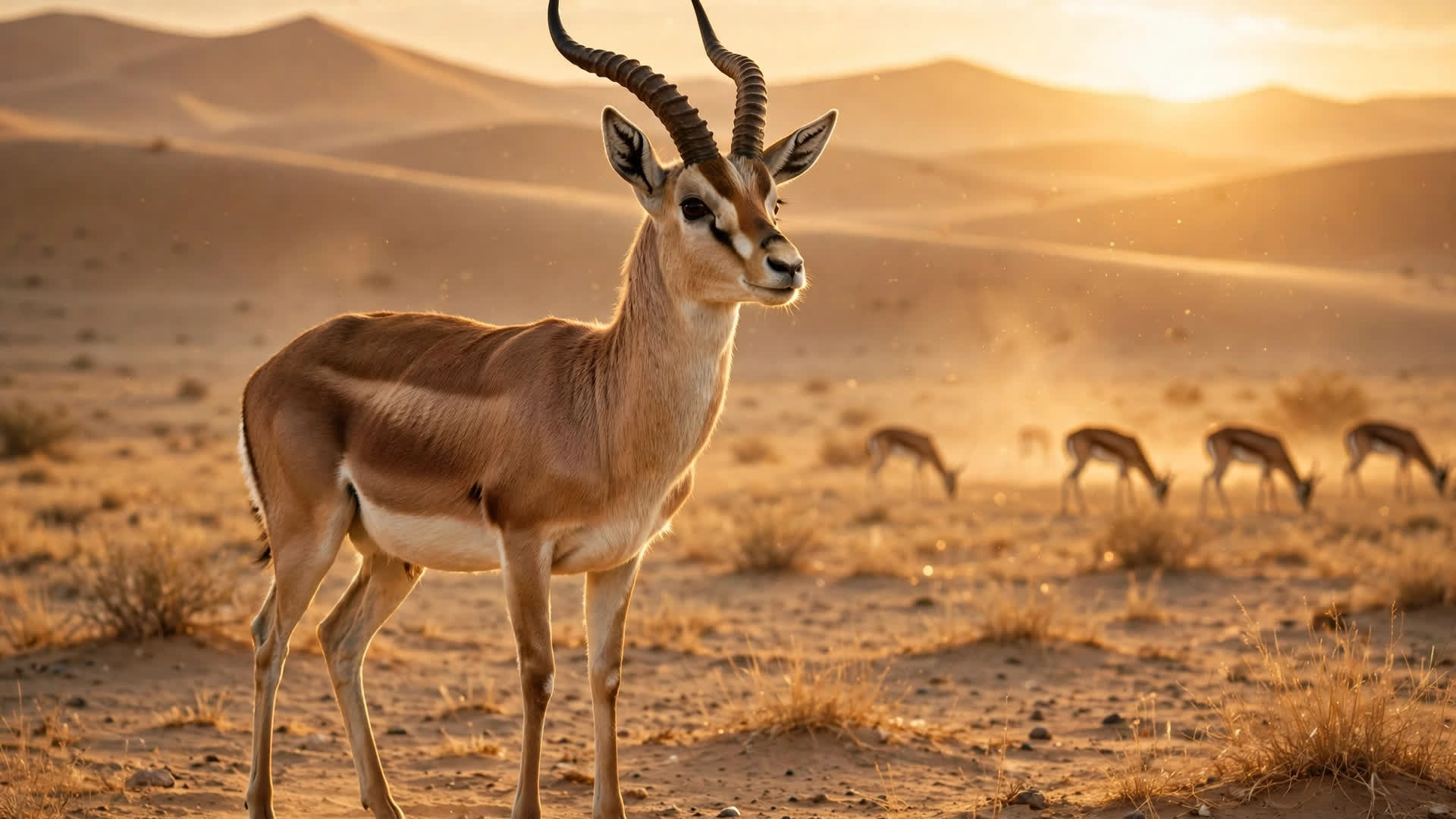
Al-baghibigh (البغيبغ) is the fat buck of the gazelles in Hayat al-Hayawan — a line that promises the full story in the gazelle chapter. Here’s what…
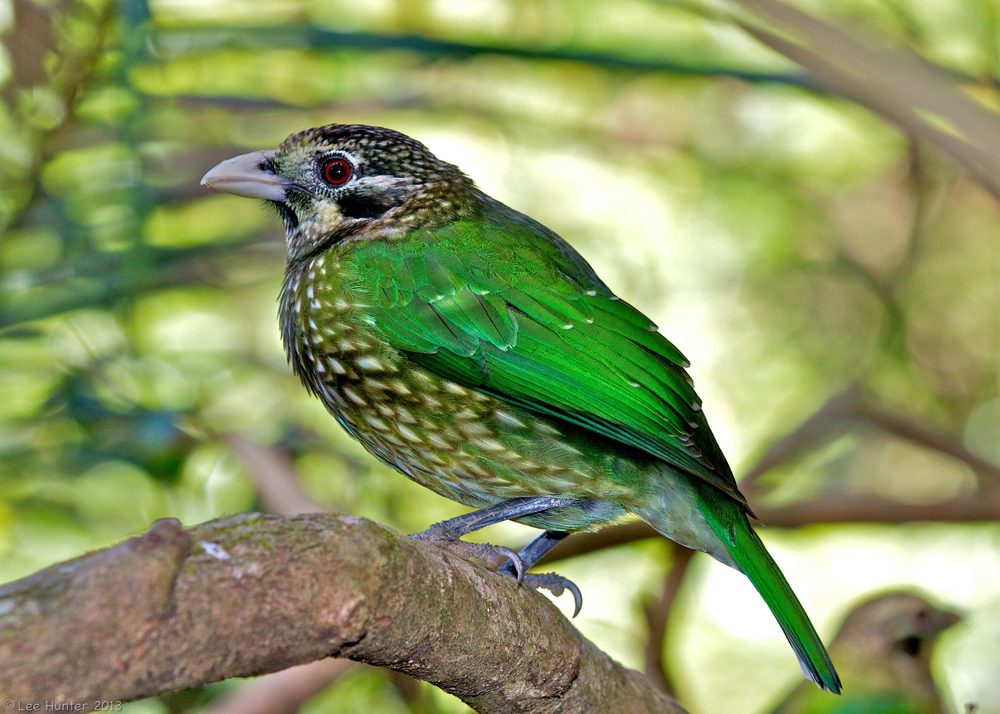
The akhayl was a speckled green bird that Arabic writers treated as a bird of ill omen. Its name became shorthand for a bad sign, and sparked a…
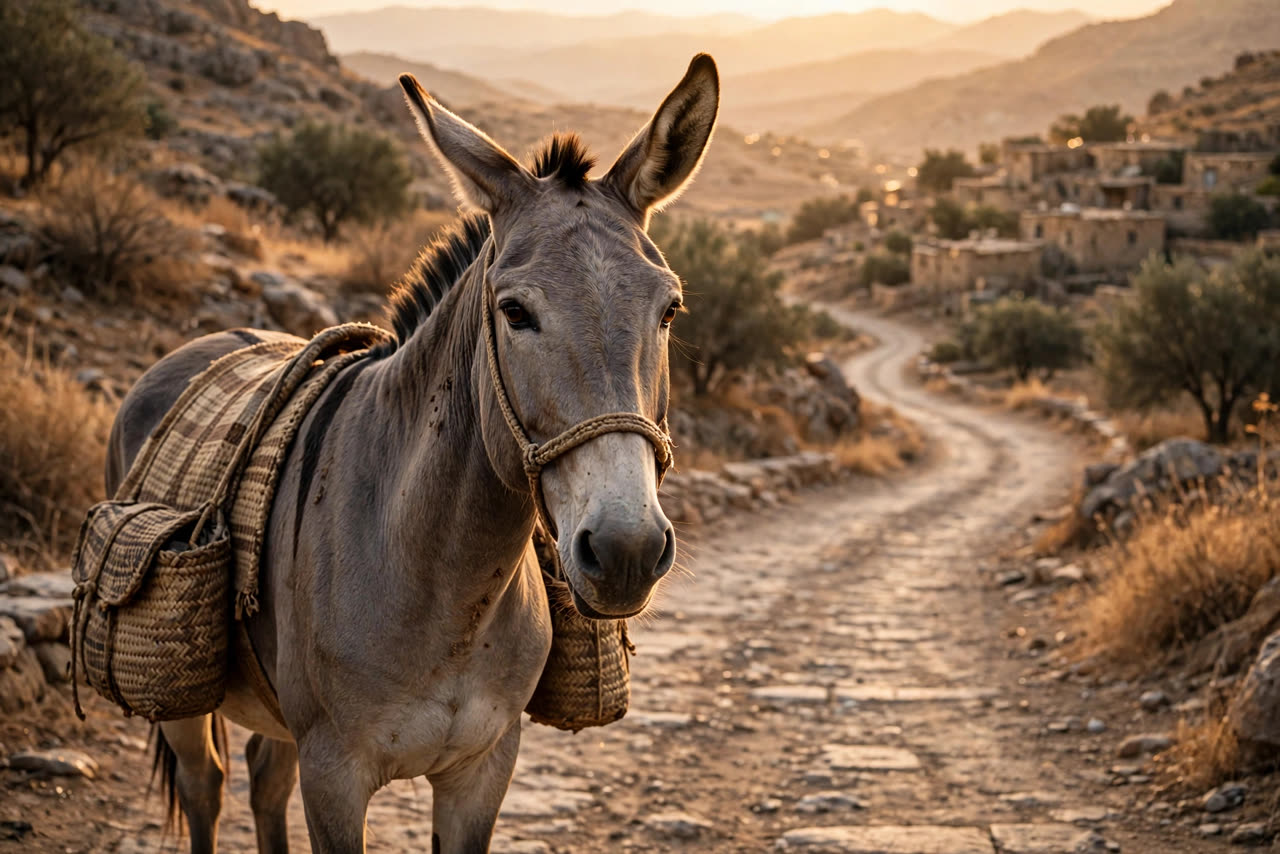
Meet al-baghl, the medieval mule: half horse, half donkey, famously sterile — yet one mule in Nablus gave birth, and Duldul changed a battle.
Meet al-baghath, the dusty, slow-flying shabby bird medieval Arabs ranked among the worst of birds, and the famous proverb that turned it into an…
Al-ba'ir (البعير): the medieval camel — named for its dung, testifying in court, freed for 100 dirhams. Strange camel facts from Damiri's Hayat…
Al-ba'ud (البعوض): the medieval mosquito — elephant-form, hollow trunk, king-killer. One mosquito tormented Nimrod 40 days. Strange facts from Hayat…
Al-butas (البطس): the fish whose gall-ink glowed in darkness. As 2026 keeps discovering new fish species, this medieval entry feels strangely alive…
Al-bashar (البشر): the shortest entry in Hayat al-Hayawan — two lines on the word human: one word for one or many, a dual from the Qur'an, and the…
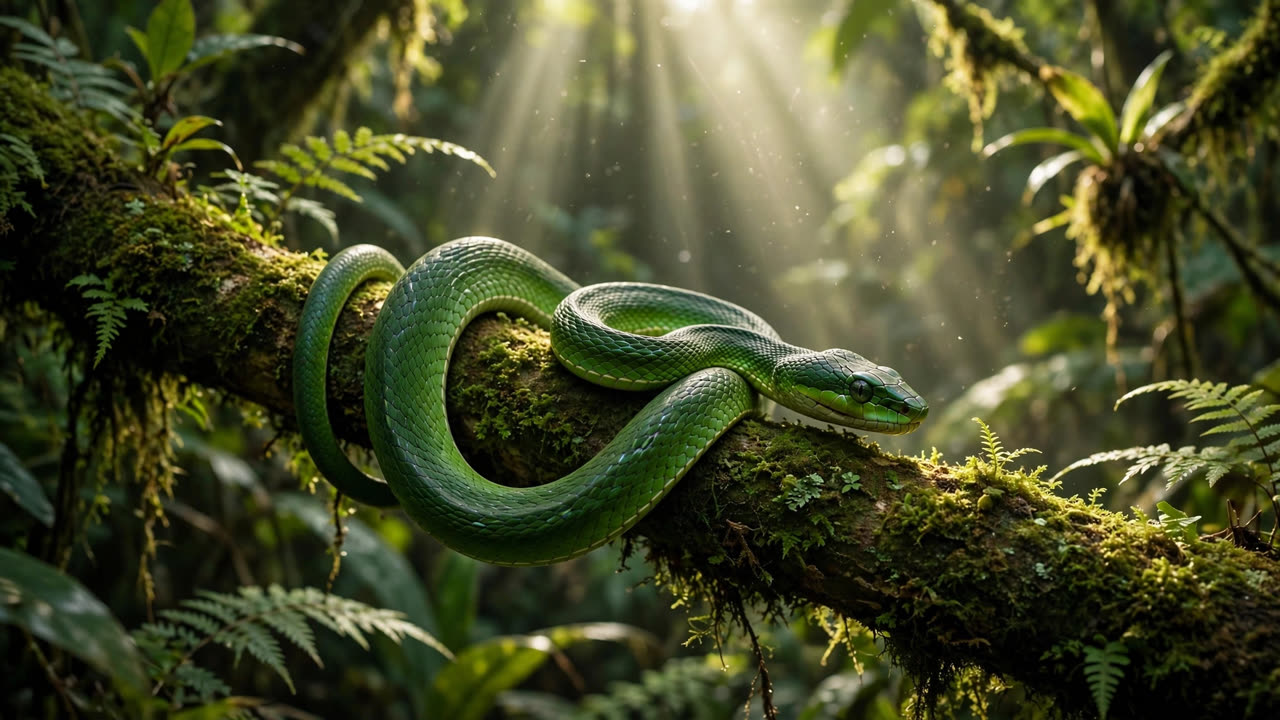
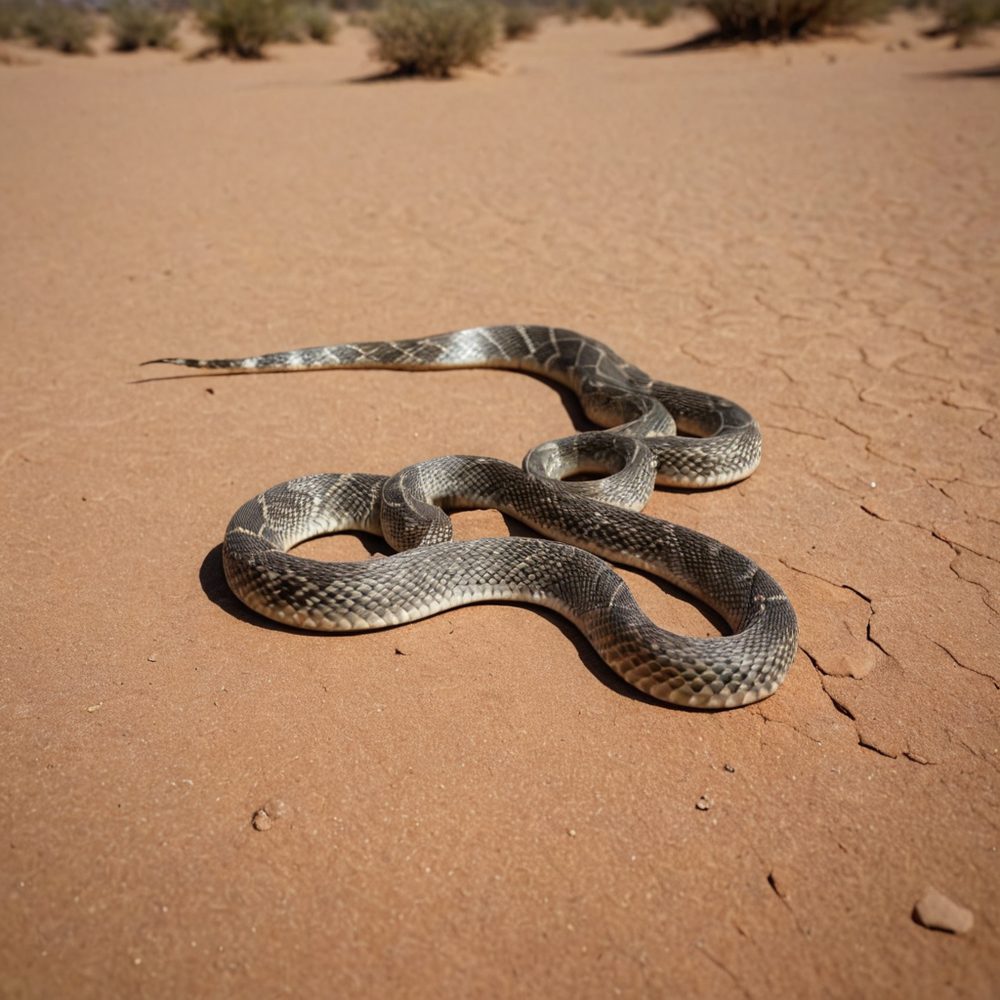
What does it mean when you see a snake? Rebirth, healing, and hidden power — snake symbolism and spiritual meaning from Greek temples and Hindu…
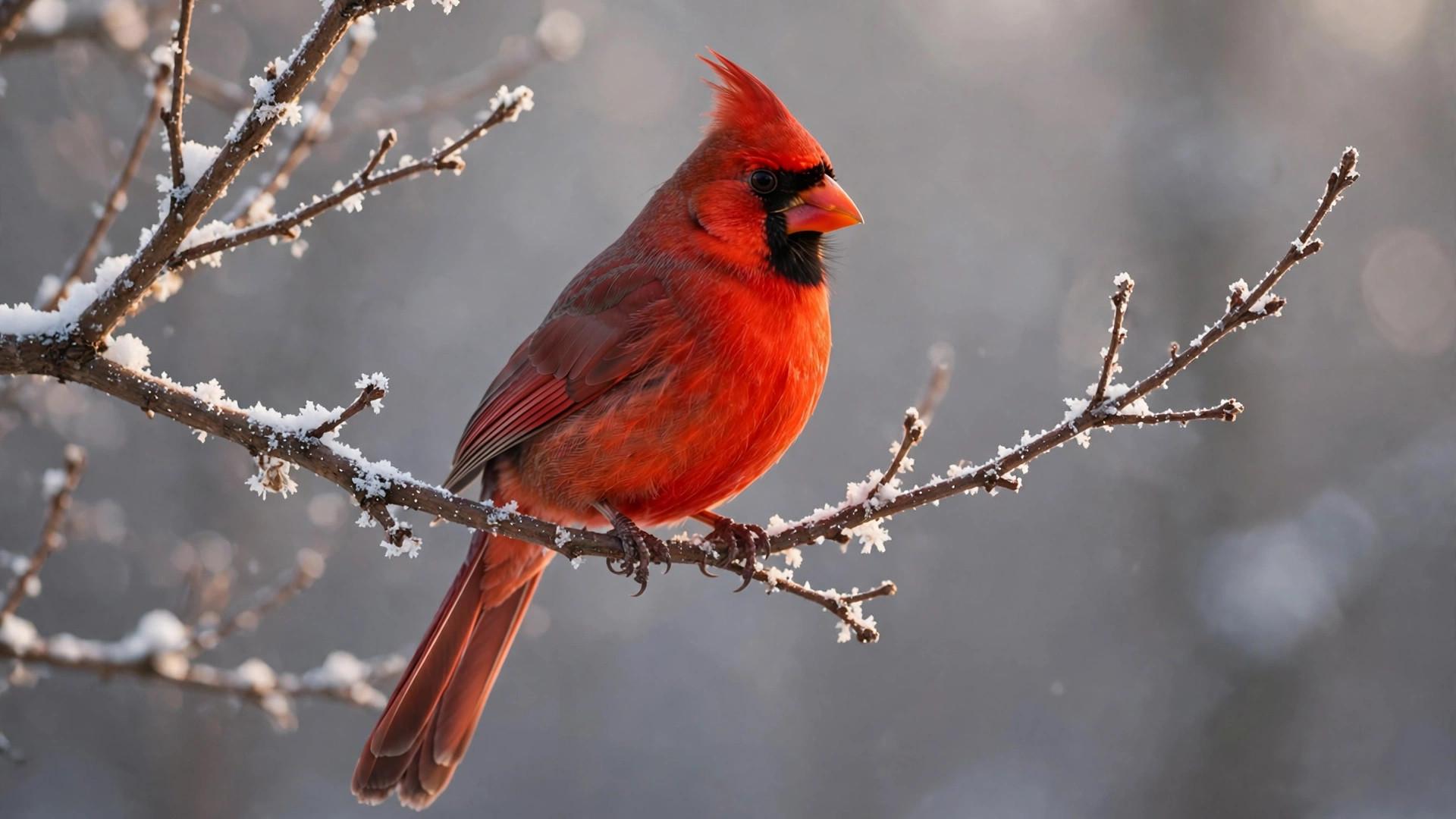
What does it mean when you see a red cardinal? The beliefs people hold dear — a visit from a loved one who passed, good luck, devotion, and strength…
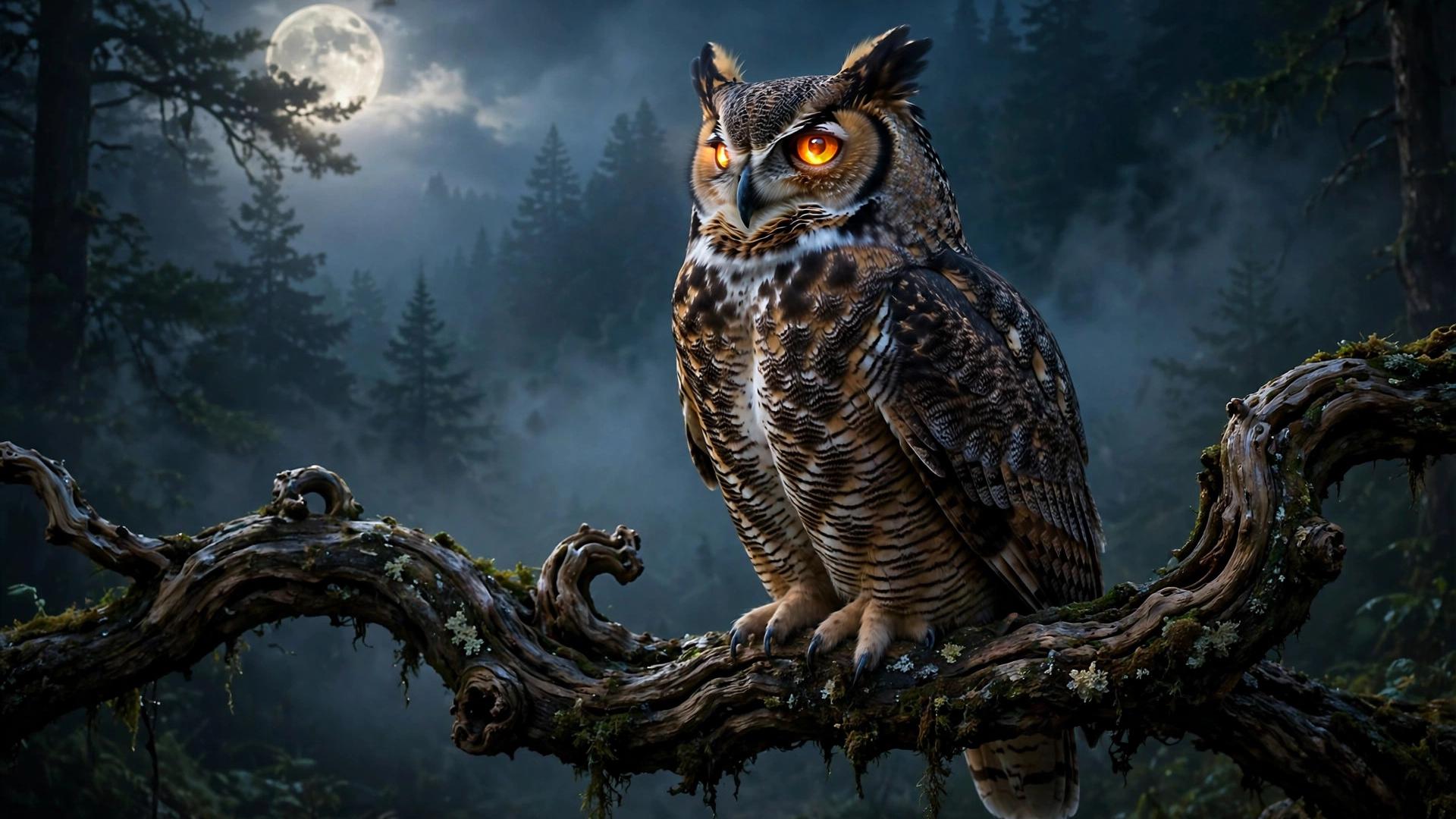
What does it mean when you see an owl at night? The wisdom of Athena or an omen of change? Owl symbolism, night sightings, and owls at your house —…
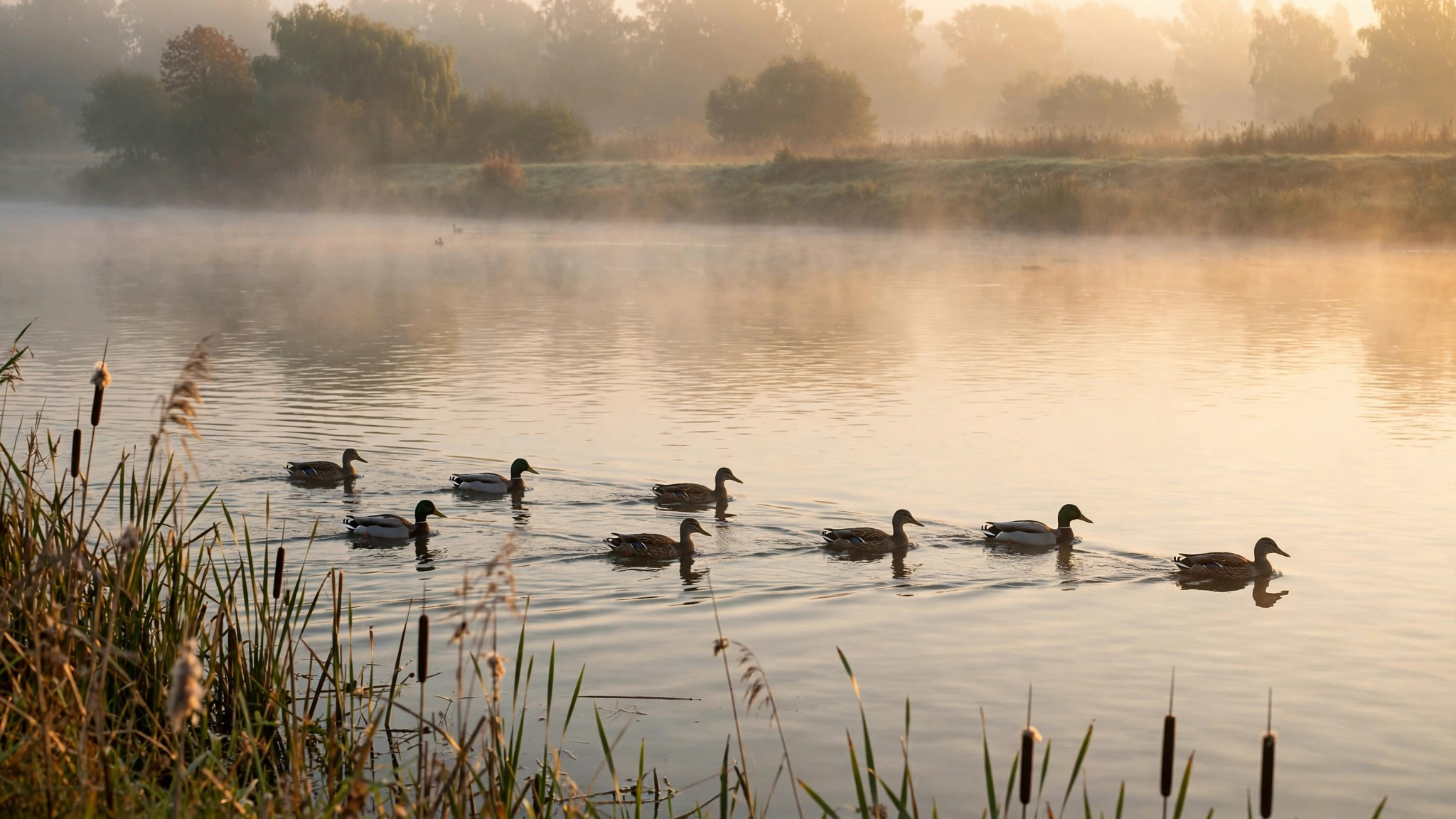
The duck (al-batt, البط) in Hayat al-Hayawan: 'Ali's two bowls, the pilgrim's ruling on ducks, and the proverb behind history's boldest replies to a…
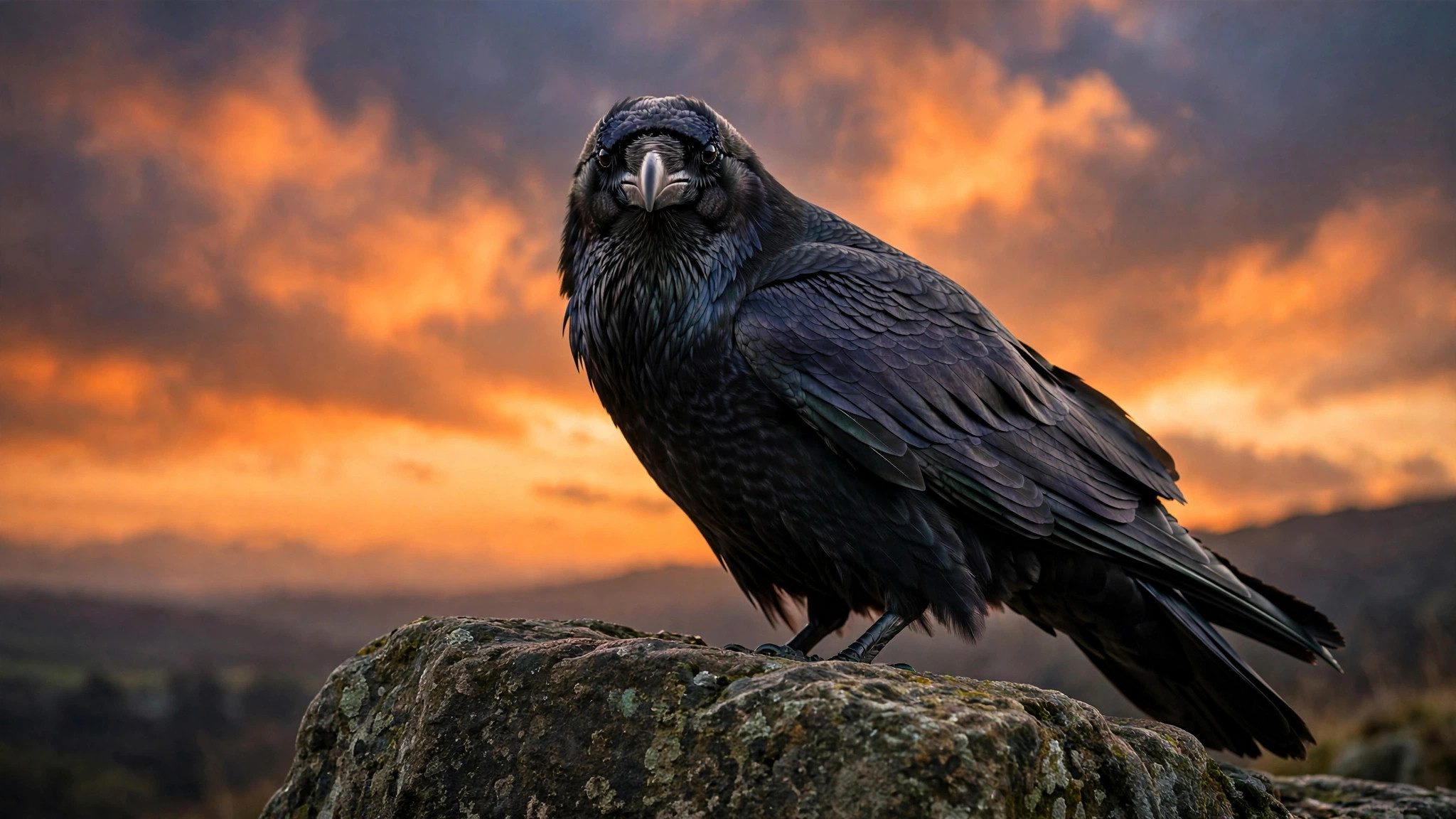
What does it mean when you see a crow? Odin's ravens, messengers of the gods, visitors and ancestors — crow and raven symbolism and spiritual meaning…
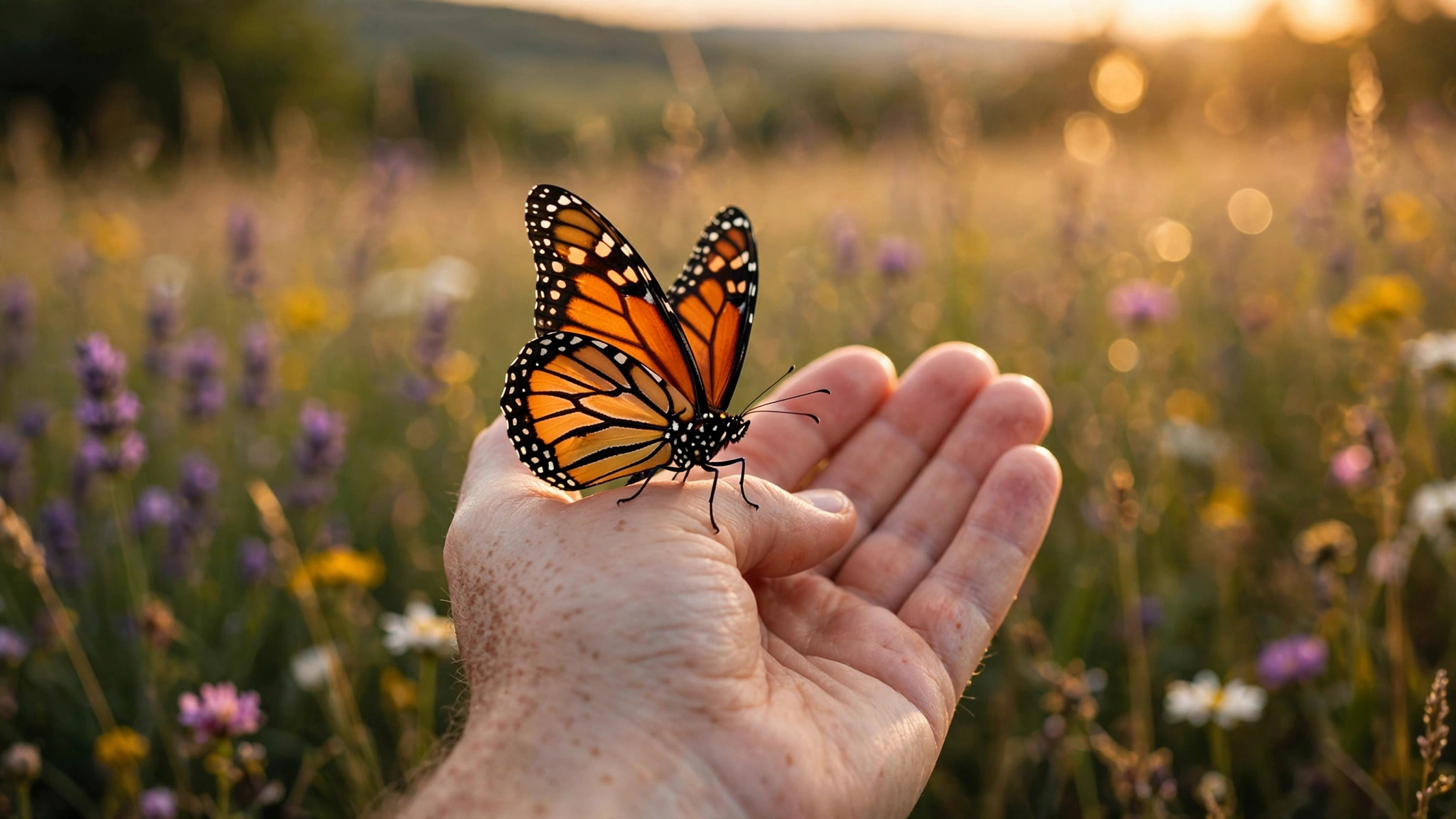
What does it mean when a butterfly lands on you? Transformation, the soul, and visits from loved ones — butterfly symbolism and spiritual meaning…
Al-barkah (البركة): the water bird of Hayat al-Hayawan, read with dammah, classed among 'birds of the evening' — and caught mid-scene in Zuhayr's…
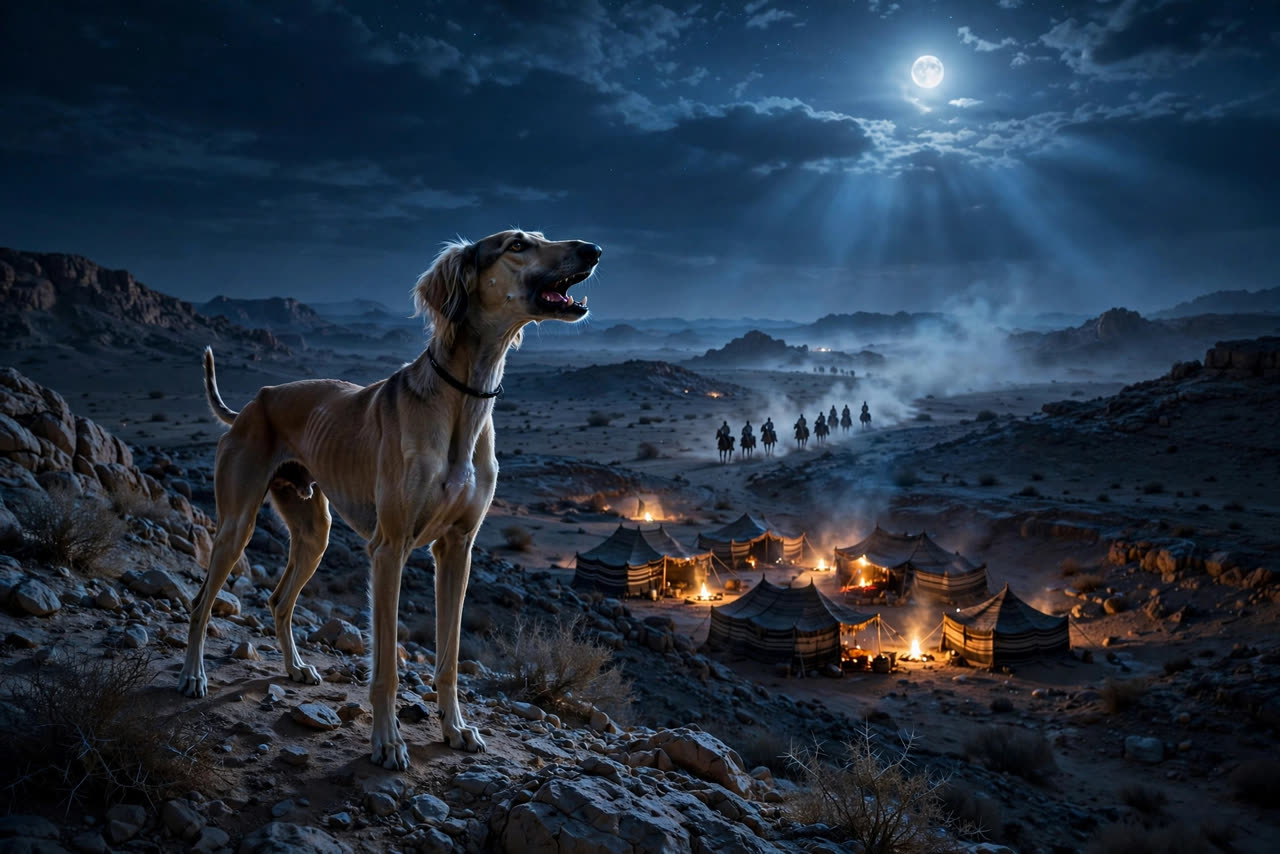
Al-barqash (البرقش): a sparrow-like bird in Al-Damiri's Hayat al-Hayawan, and the she-dog Barāqish whose bark betrayed her tribe — origin of an…
A spider's web covered the Cave of Thawr during the Hijra — and the Quran calls the spider's house the weakest of all homes. What the 700-year-old…
Abraha's war elephant Mahmud knelt and refused to attack Makkah — then birds rained stones on the army. Plus: the mother elephant that tracked…
An ant warned its colony about Solomon's army — and the prophet smiled. An entire Quran chapter is named after the ant. Discover what a 700-year-old…
Al-barqana (البرقانة) — the 'colored locust' in Al-Damiri's Hayat al-Hayawan: a one-line entry from Ibn Sida, its plural barqān, and what one word…
The hoopoe bird carried Solomon's letter to the Queen of Sheba — and could see water hidden deep underground. But a child could still trap it. The…
Al-bara (البرا) in Hayat al-Hayawan: a single-line entry — a bird called al-samwil, its full story promised in the sin chapter. What one line teaches…
Three dictionaries fought over one word for wild cow — because Arab poets compared beautiful women to her. A tiny entry hiding a thousand years of…
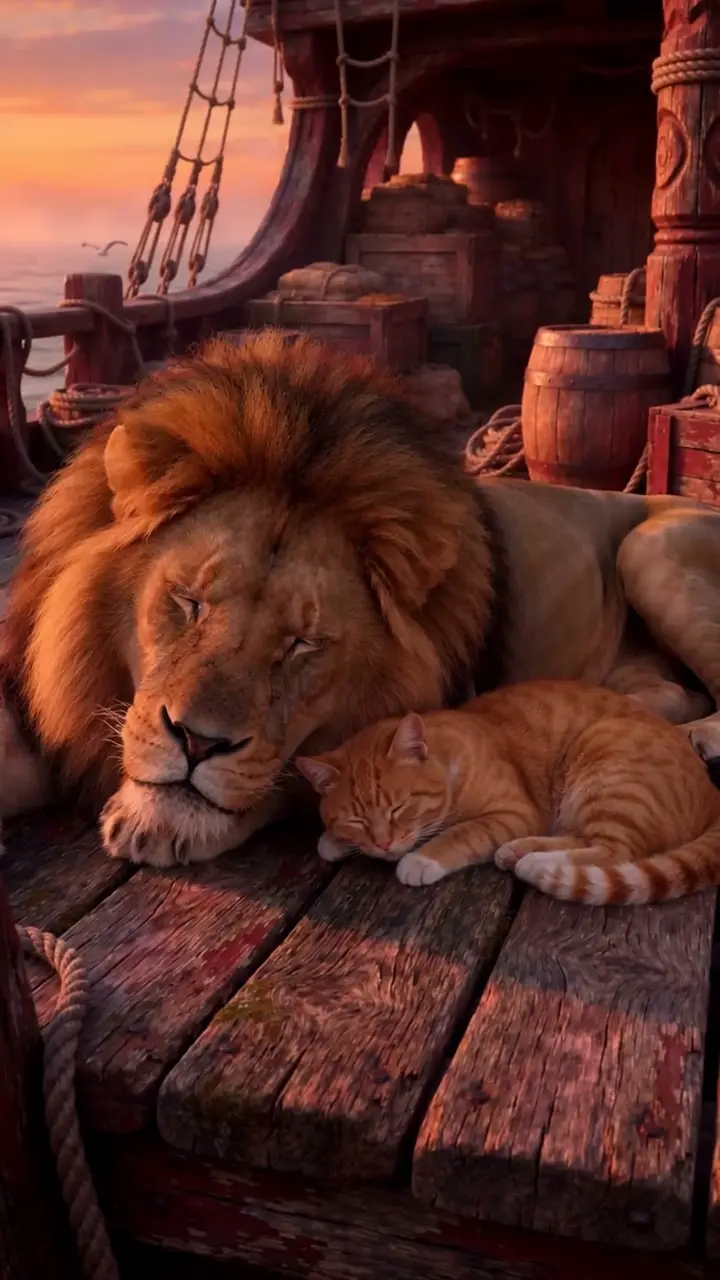
Noah’s Ark was full of animals that would never willingly sleep side by side. Hooves beside claws. Wings beside teeth. Now put a lion among them and…
Kill the arqam and it takes revenge; leave it and it devours you. The spotted snake behind a proverb about impossible choices — from a 700-year-old…
The arbad's bite changes the victim's face — and a governor once recited its verse as a graveside eulogy. Strange snake facts from a 700-year-old…
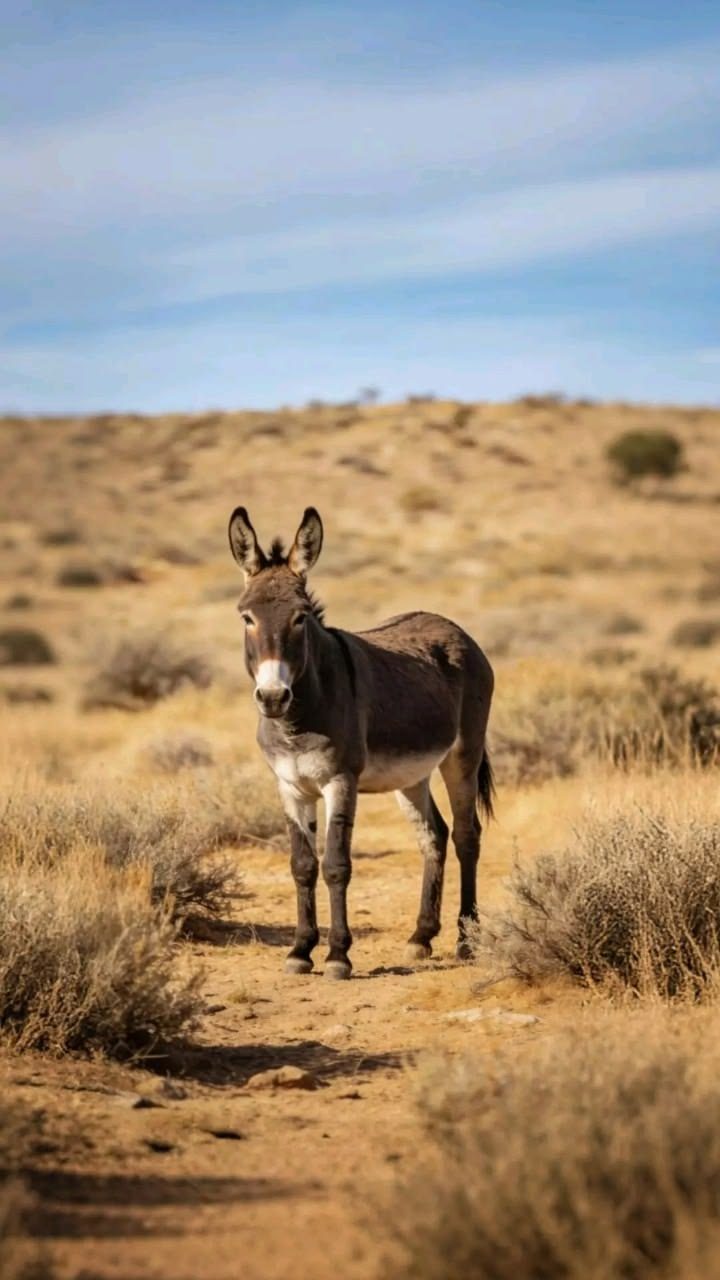
Riding a she-donkey cures pride, says a 700-year-old book — plus the broke Bedouin who out-dignified a governor riding the leanest mount in the…
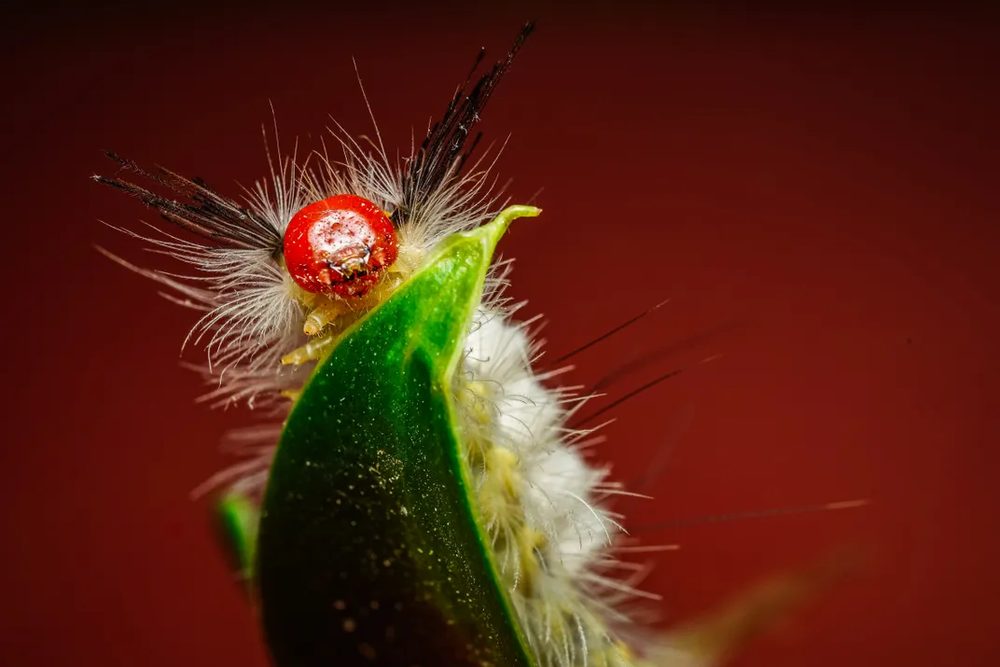
Red caterpillars that become butterflies sparked a 1,000-year-old typo hunt among scholars. Caterpillar facts, metamorphosis, and one scribe's bad…
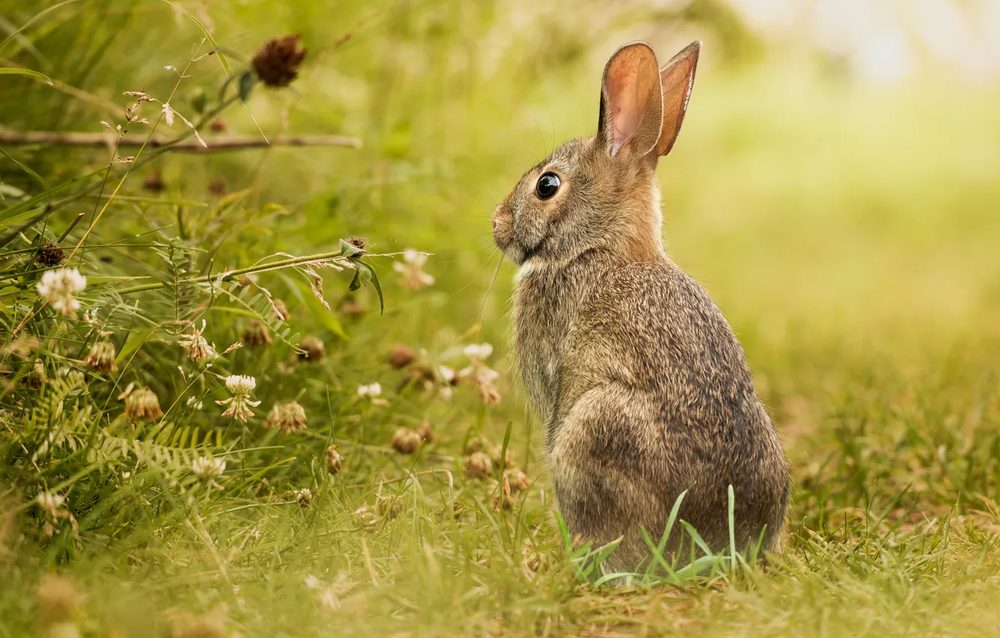
Rabbits scare away evil spirits, sleep with eyes open, and once took a fox to court before a lizard judge. Bizarre rabbit facts from a 700-year-old…
What were the Ababil birds of the Quran? A 700-year-old book collects five wild answers — green birds rising from the sea with lion heads and dog…
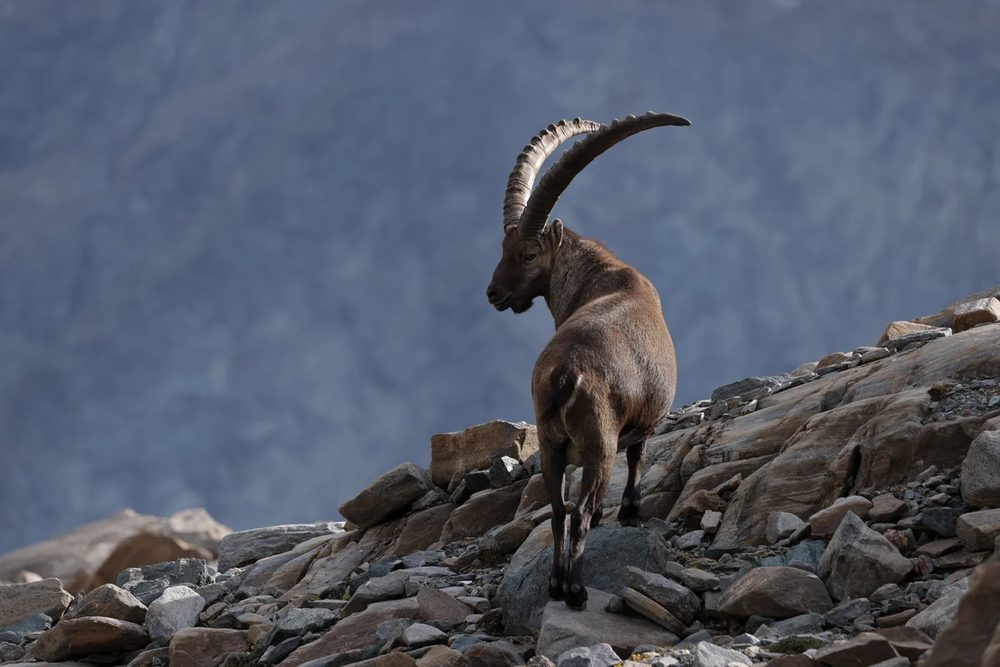
An ibex nursed the Prophet Jonah back to life with her milk, says a 700-year-old book. Ibex facts, mountain proverbs, and the lawsuit that made…
The lion has 630 Arabic names, fears the rooster's crow — and once sneezed out the first cat aboard Noah's Ark. Wildest lion facts from a…
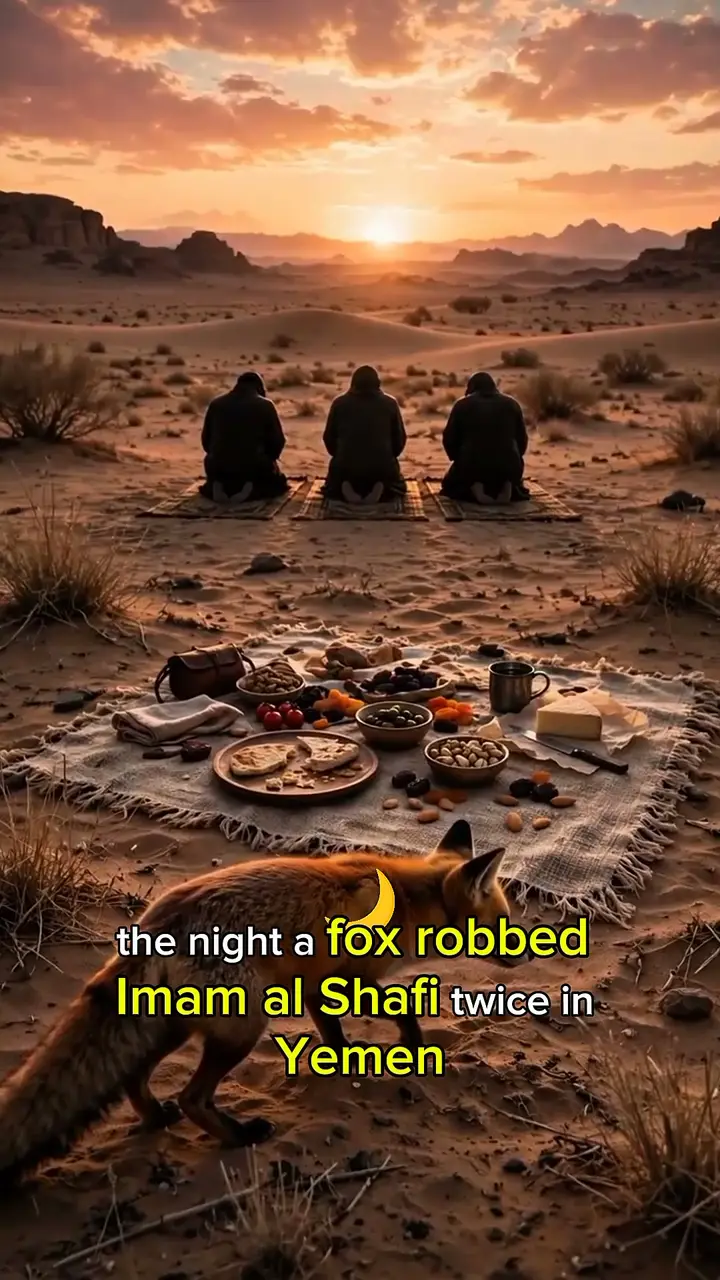
Dinner was supposed to be simple. A chicken had been prepared for Imam Al-Shafi'i, everyone was settling in, and somewhere just beyond the camp a fox…
Picture the view from the Ark: water where the roads, roofs, and fields used to be. Everyone aboard was waiting on the same question. Had the flood…
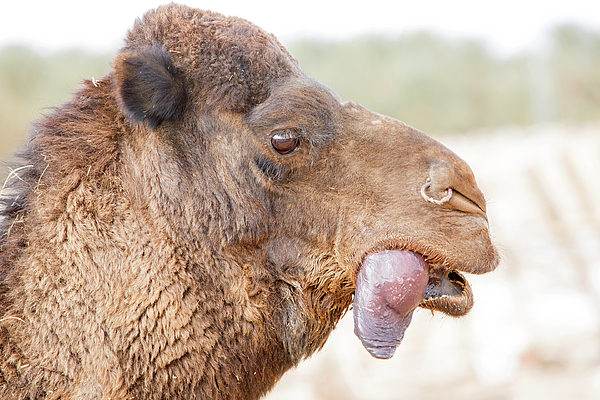
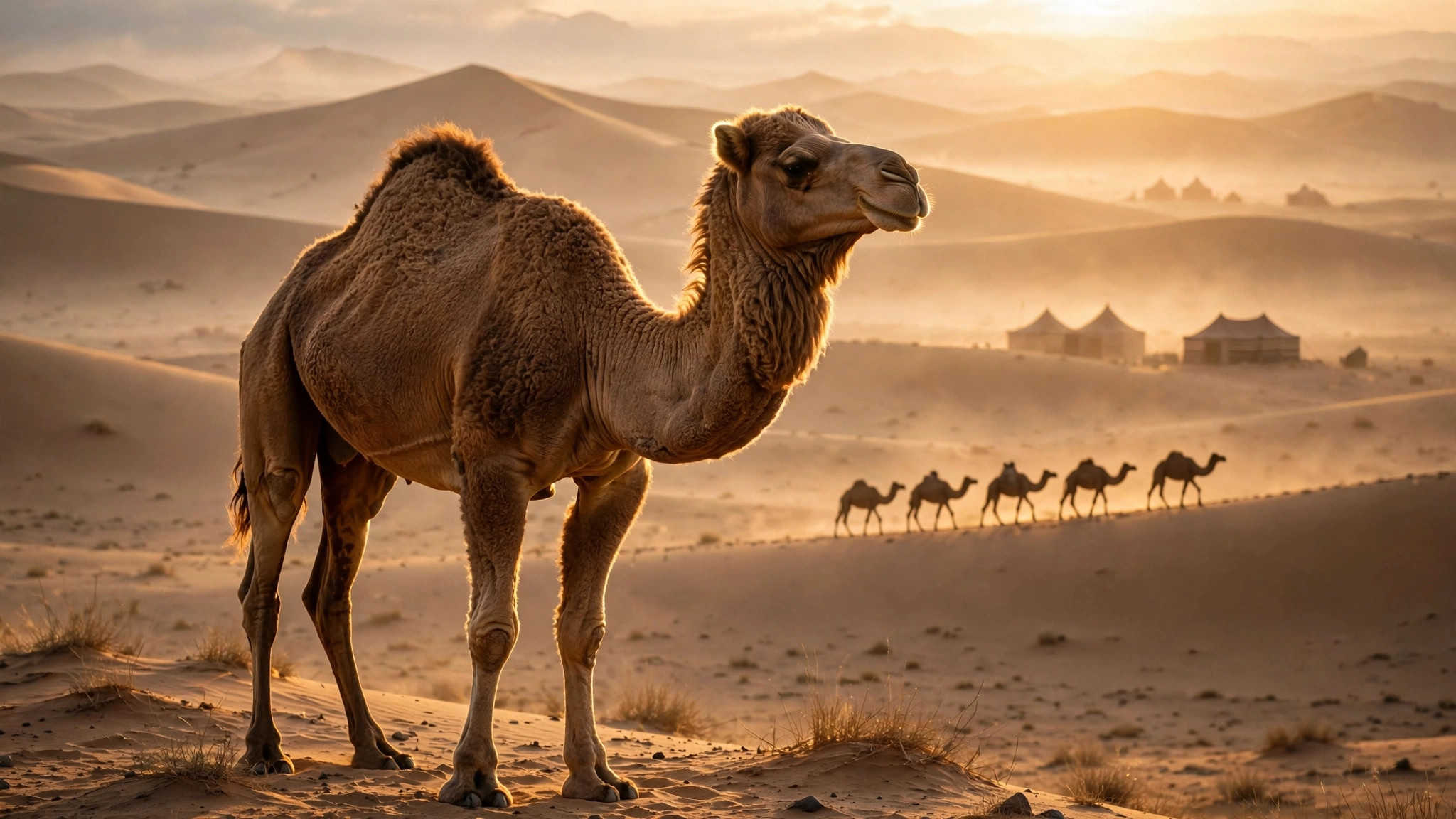
Male camels inflate a red balloon from their throats in mating season — proverbial for rage. Camel facts: no gallbladder, thorn-eating guts, desert…
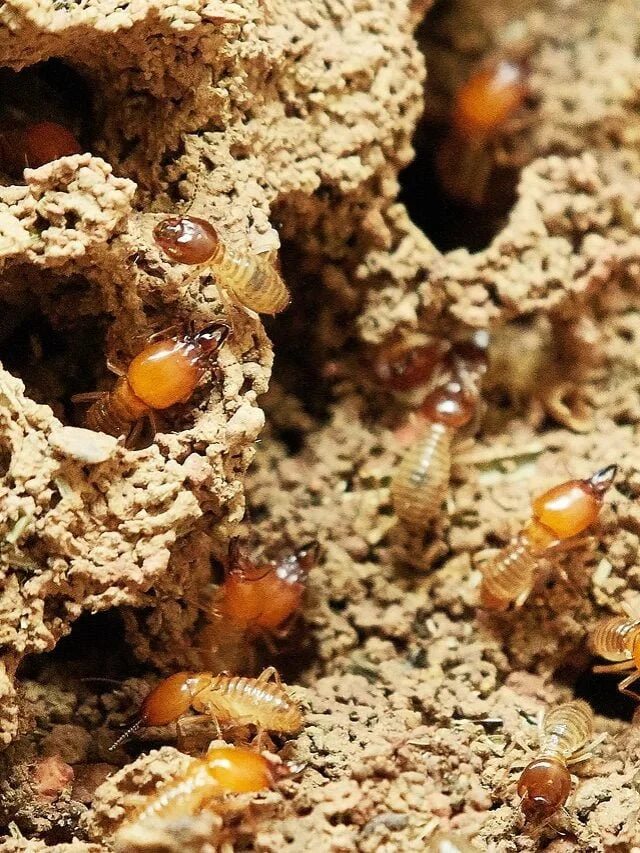
Termites ate through Solomon's staff and ended a three-year boycott of Mecca. Wild termite facts from a 700-year-old book — and houses that taught us…
Al-barghan (البرغن) in Hayat al-Hayawan: a one-line entry naming 'the calf of the wild cow' — with two valid pronunciations, and the story behind the…
Al-Buraq (البراق): the white heavenly steed of the Night Journey — smaller than a mule, bigger than a donkey, its stride at the farthest edge of its…
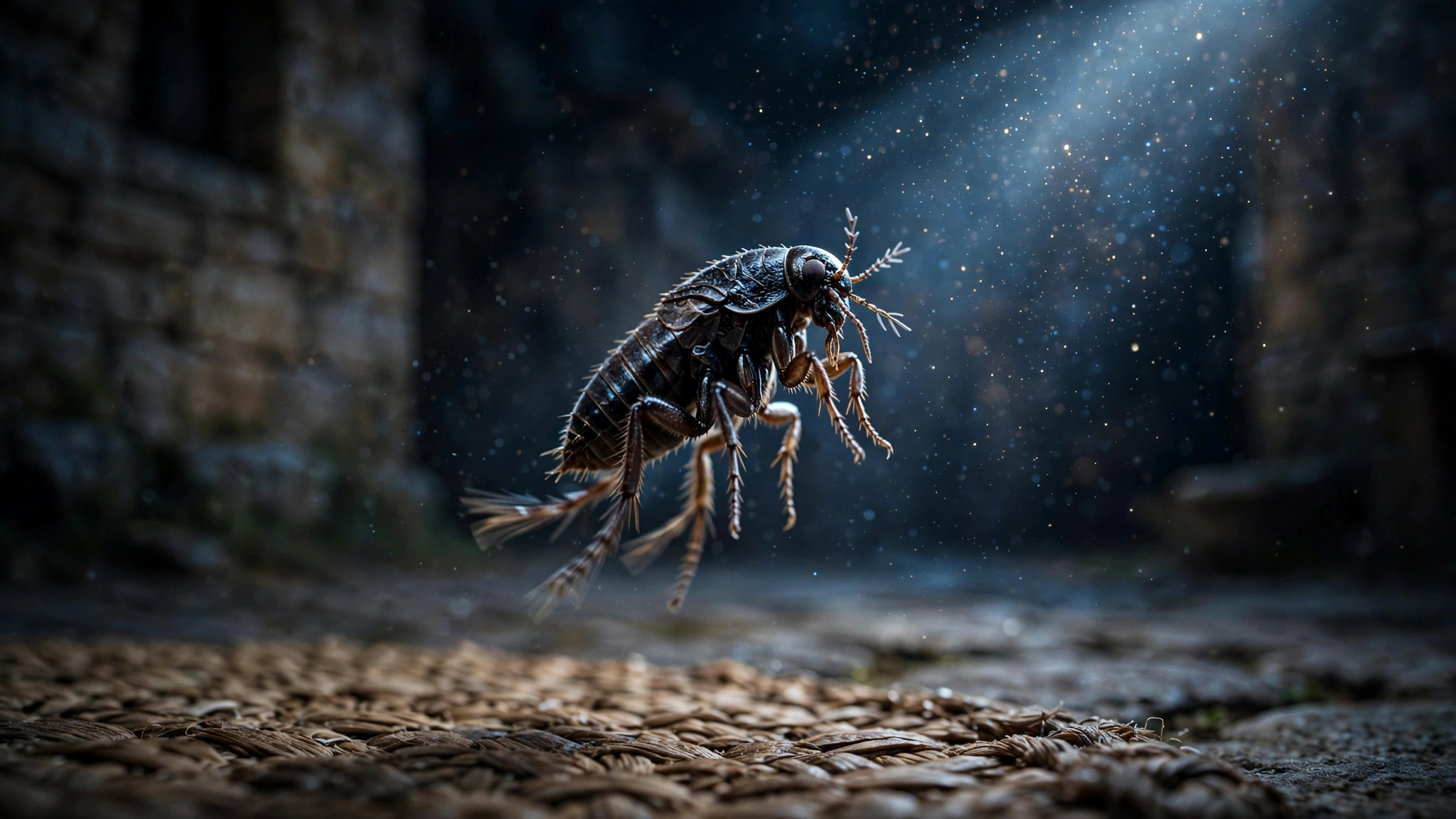
Al-barghuth (البرغوث), the flea in Hayat al-Hayawan: the grammar-breaking jumper that leaps backward, looks like an elephant, and woke a prophet for…
Al-bakht (البخت): the two-humped Bactrian camel in Hayat al-Hayawan — a stolen one that walked free, a prophecy about hairstyles, and birds in…
Al-badhj (البذج): the Persian loanword for a baby lamb that became Arabic's symbol of meekness, a dying man's dream dinner, and a proverb for the…
Al-badana (البدنة): the sacrificial camel of hajj — seven dinars for one, the first dedication in history, and the Prophet's camels that rushed to be…
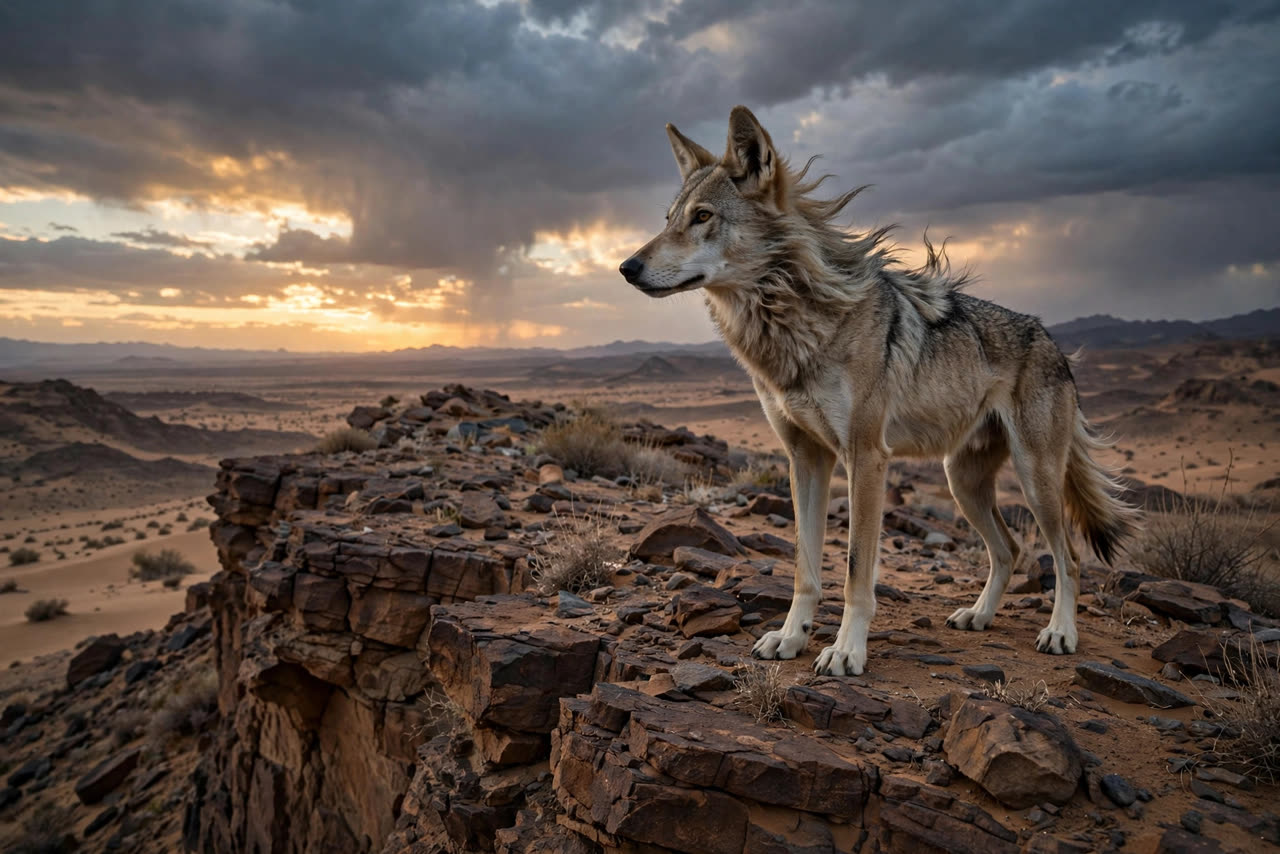
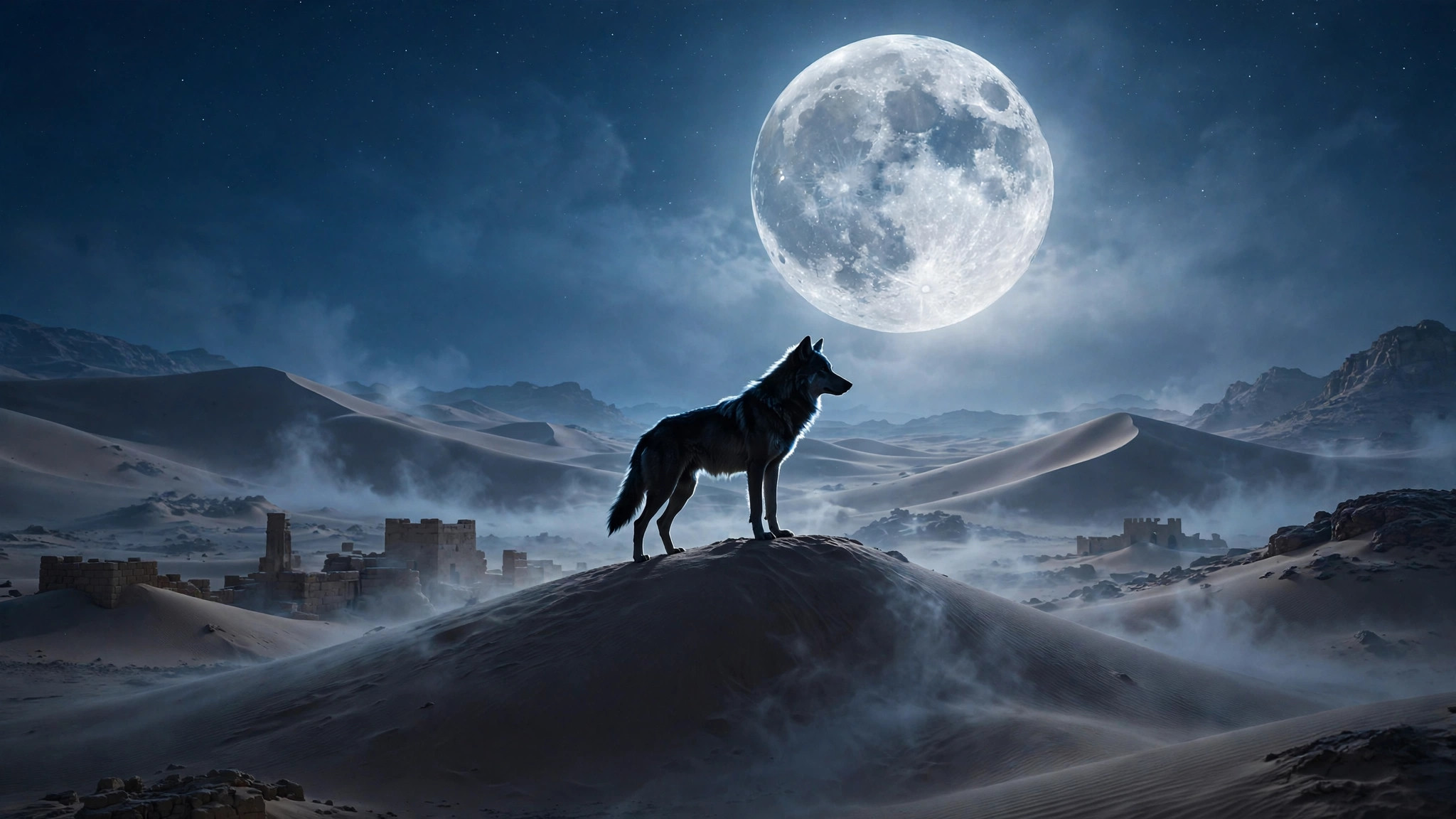
It begins with a wolf, which feels like the obvious place for danger to peak: speed, teeth, and a body made for the chase. But Hayat al-Hayawan…
The babr (الببر): Hayat al-Hayawan's wind-born tiger — conceived from the wind itself, its cubs stolen in glass bottles, and a camphor tree guarded…
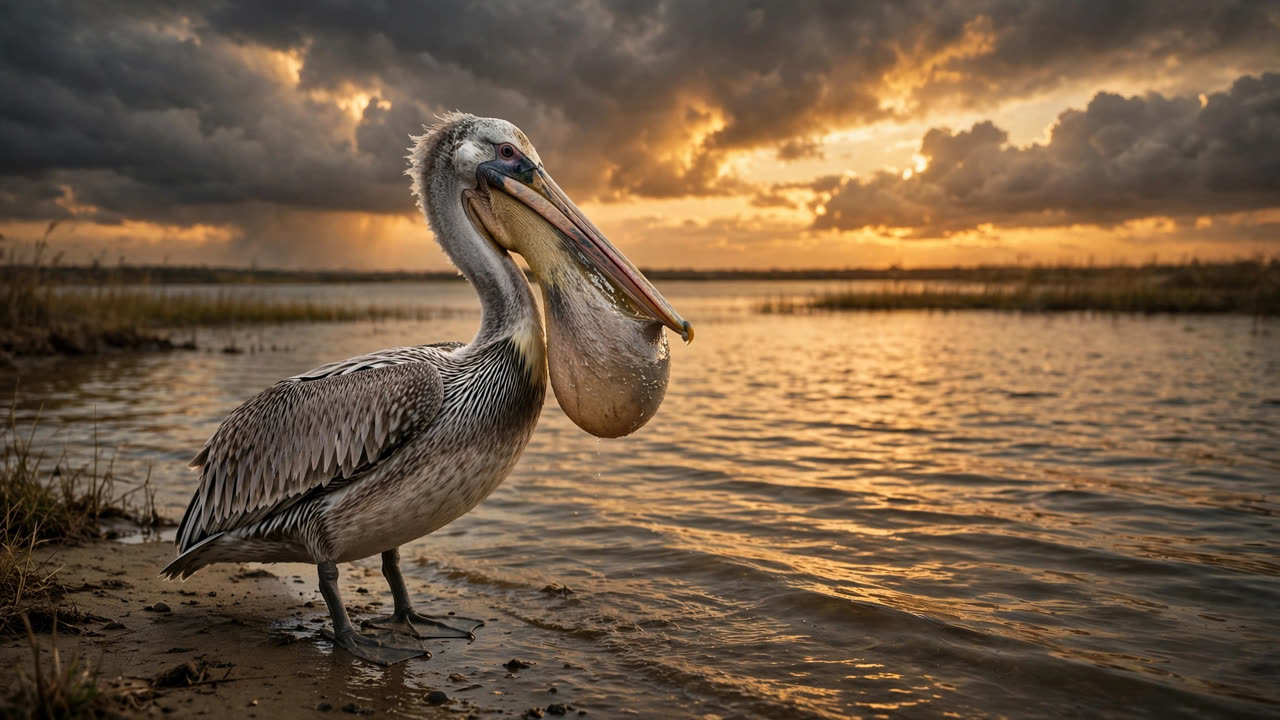
Al-baja' (البجع), the pelican of Hayat al-Hayawan: a poet's riddle about the bird with its beak in its belly — and the old belief that a verse on its…
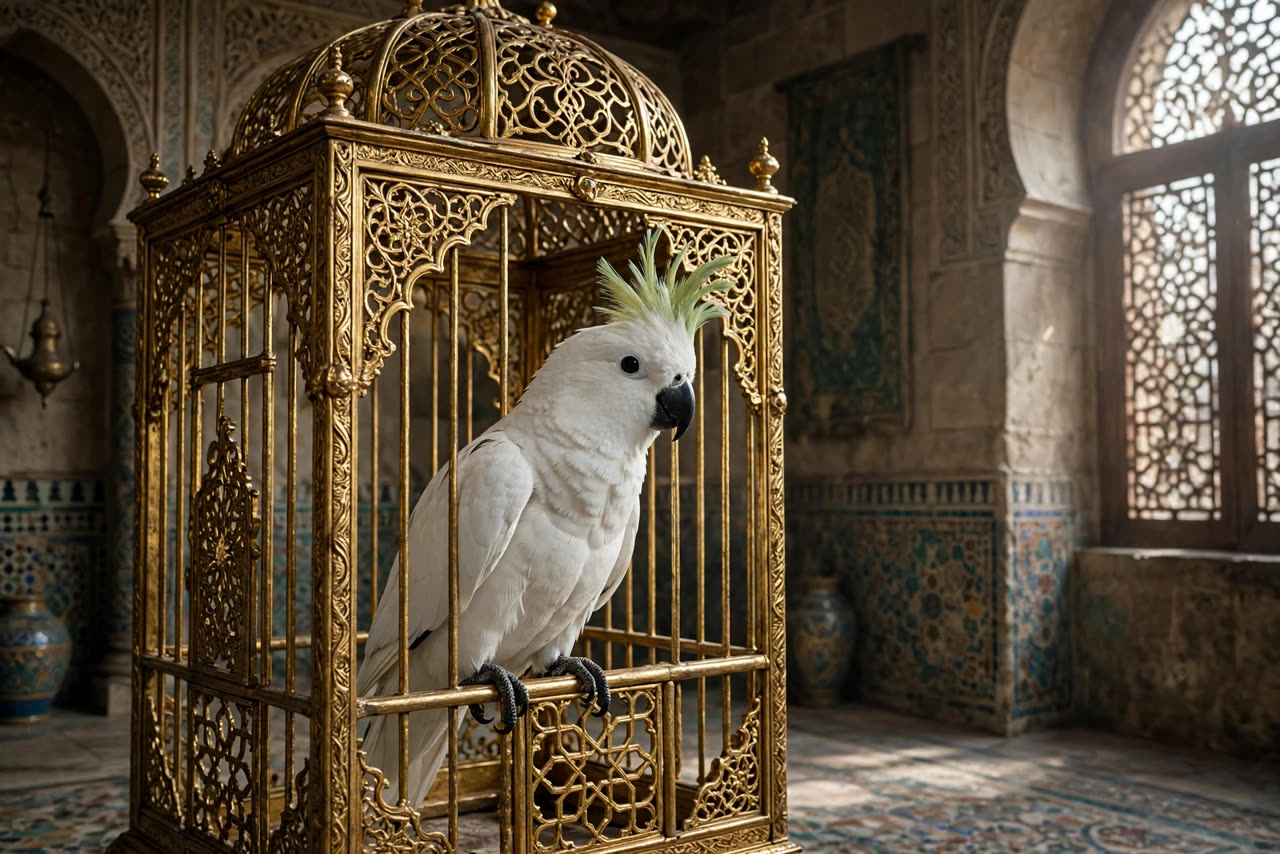
Hayat al-Hayawan's parrot (الببغاء): kings used talking parrots as palace spies, Aristotle taught one with a mirror — and a white parrot with a black…
Al-bajj (البج) gets one sentence in Hayat al-Hayawan: a water bird whose whole genus al-Damiri promises to cover later — a 700-year-old cliffhanger.
Al-bakhzaj (البخزج) in Hayat al-Hayawan: one short line — 'the calf of the wild cow' — with the letters spelled out, and the story behind the word.
Al-bajaq (البجاق) in Hayat al-Hayawan: a four-word entry — 'on the pattern of ghurab: the male wolf' — and the book's growing list of wolf names.
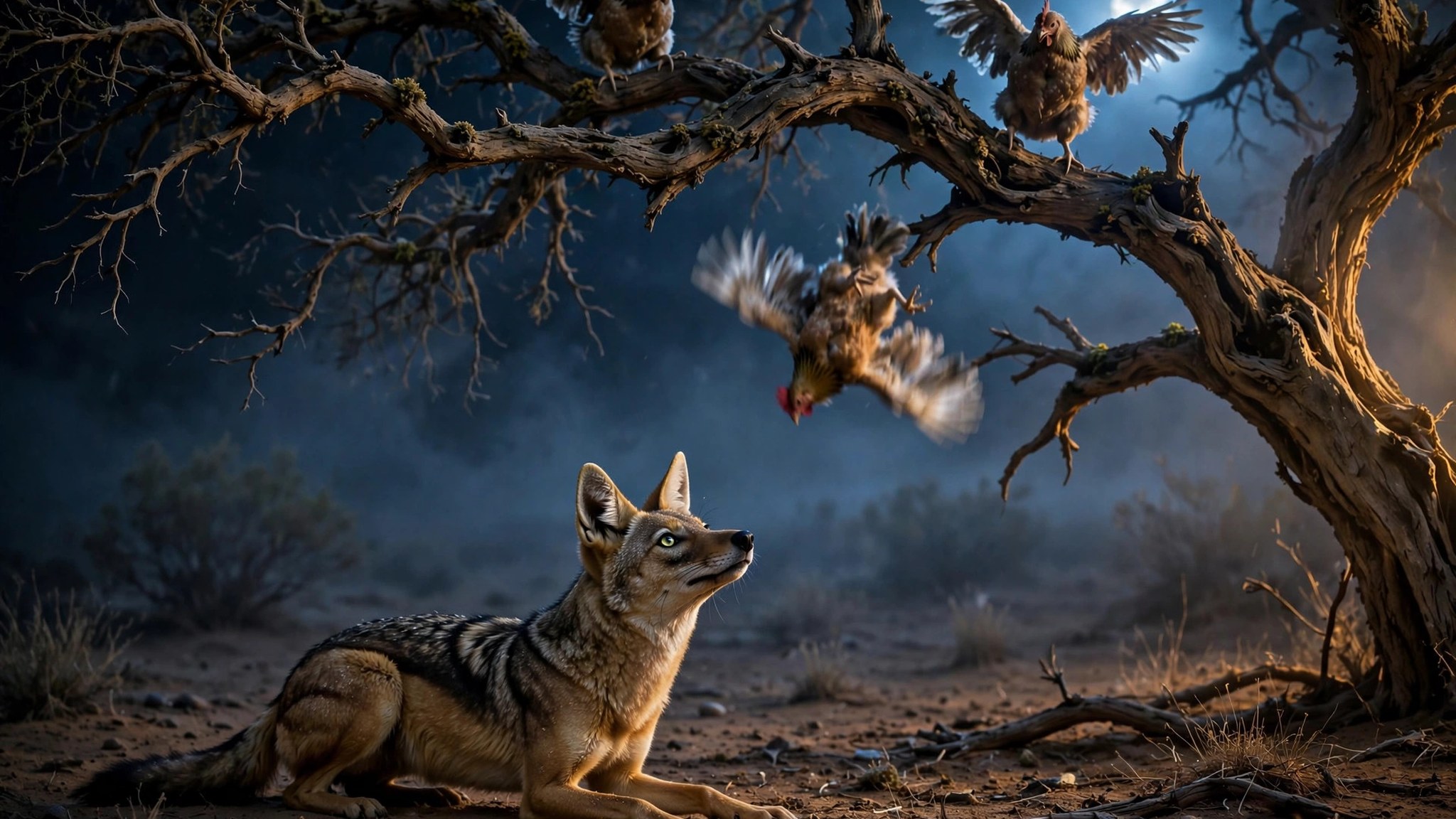
Ibn awa (ابن آوى) is the jackal of Hayat al-Hayawan: chickens fear it more than the fox, it stinks in its cage when caught, and scholars argued over…
Al-bazil (البازل) in Hayat al-Hayawan: the camel whose split canine marks its eighth year — the animal behind a famous teaching that the best of…
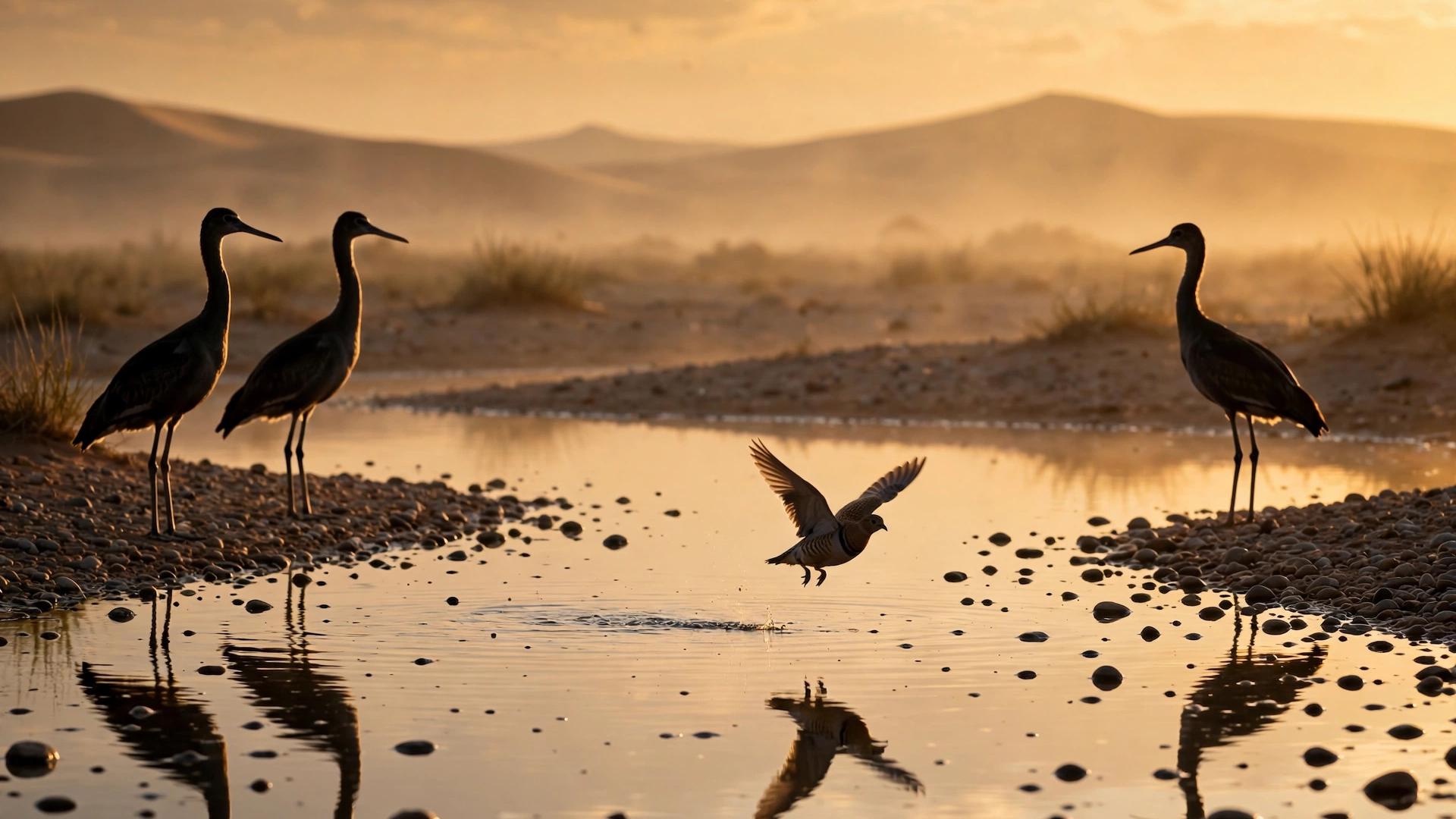
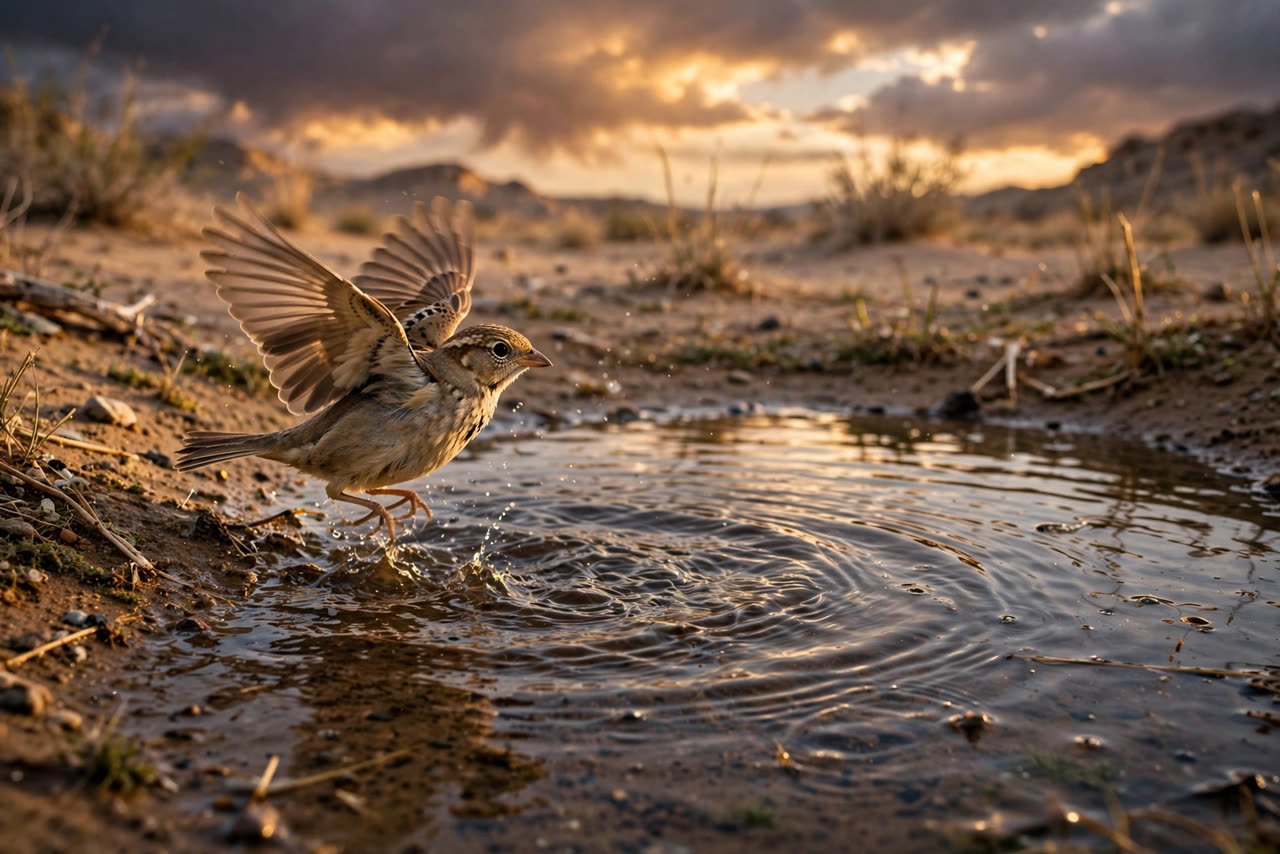
Al-baqi'a (الباقعة) in Hayat al-Hayawan: the Arabic word for 'calamity' — a dangerously clever man — and a wary bird that drinks water flying right…
Balam (بالام) in Hayat al-Hayawan: the mystery word in a famous report — 'balam and nun,' a bull and a whale whose livers feed 70,000 in Paradise —…
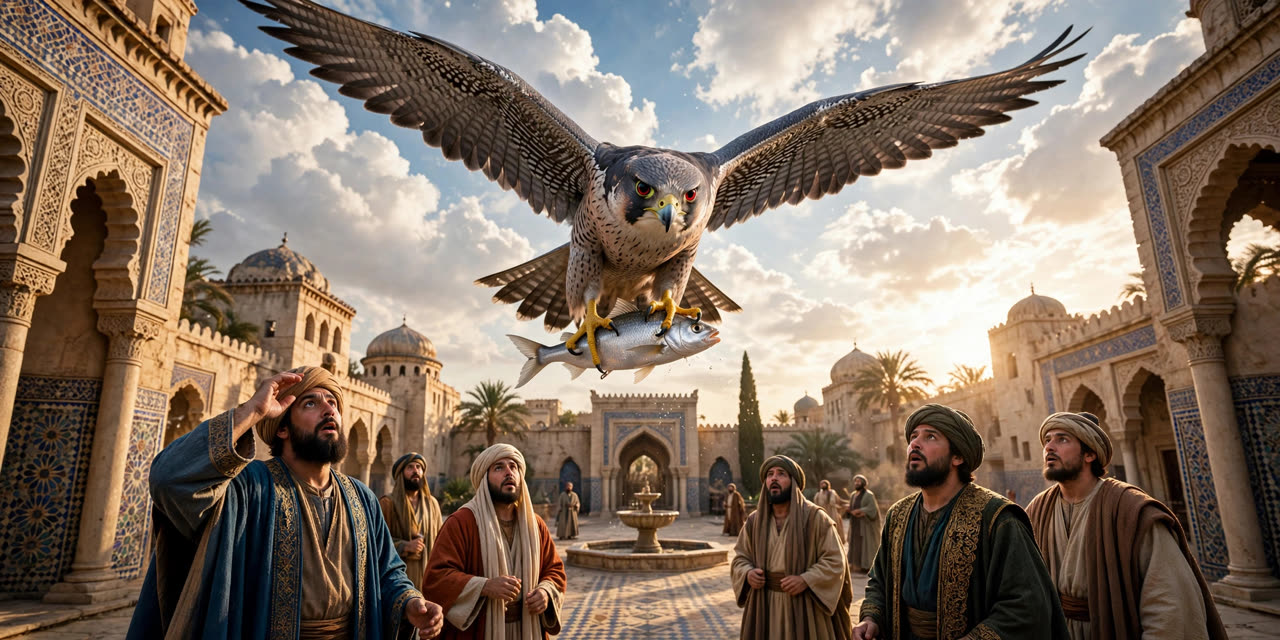
Al-bazi (البازي) is the falcon of Hayat al-Hayawan: the arrogant bird that vanished into the sky and returned with a fish, shamed a judge into…
Al-babus (البابوس) in Hayat al-Hayawan: a two-line entry meaning 'someone's little one' — saved from oblivion by a poet's camel yearning for her…
Al-aym (الأيم) in Hayat al-Hayawan: the male serpent that circled the Ka'ba seven times and prayed two rak'as — the strangest pilgrim story in a…
Al-ilas (ايلس) is a one-paragraph fish in Hayat al-Hayawan: al-Qazwini's enormous uncatchable sea fish, whose roasted meat the book claims turns…
Al-ayl (الأيل) in Hayat al-Hayawan: the male ibex that hurls itself off cliffs unharmed, eats venomous snakes, and weeps tears that harden into…
Al-aws (الأوس) means 'the wolf' in Hayat al-Hayawan: a wolf called Uwais at a funeral, a wolf feeding a hyena's cub, and the saint Uwais al-Qarni…
Al-awraq (الأورق) is the gray camel of Hayat al-Hayawan: white-darkened in color, the tastiest camel meat — but not praised for work or pace, per…
Al-awda' (الأودع) is the jerboa in Hayat al-Hayawan: a one-line entry quoting al-Jawhari, with the full entry promised in the last chapter, bāb…
Al-Damiri's entry on the ataysh bird is one line — then it becomes a biography of Imam al-Shafi'i, with a death-wish, a dream about Jupiter, and a…
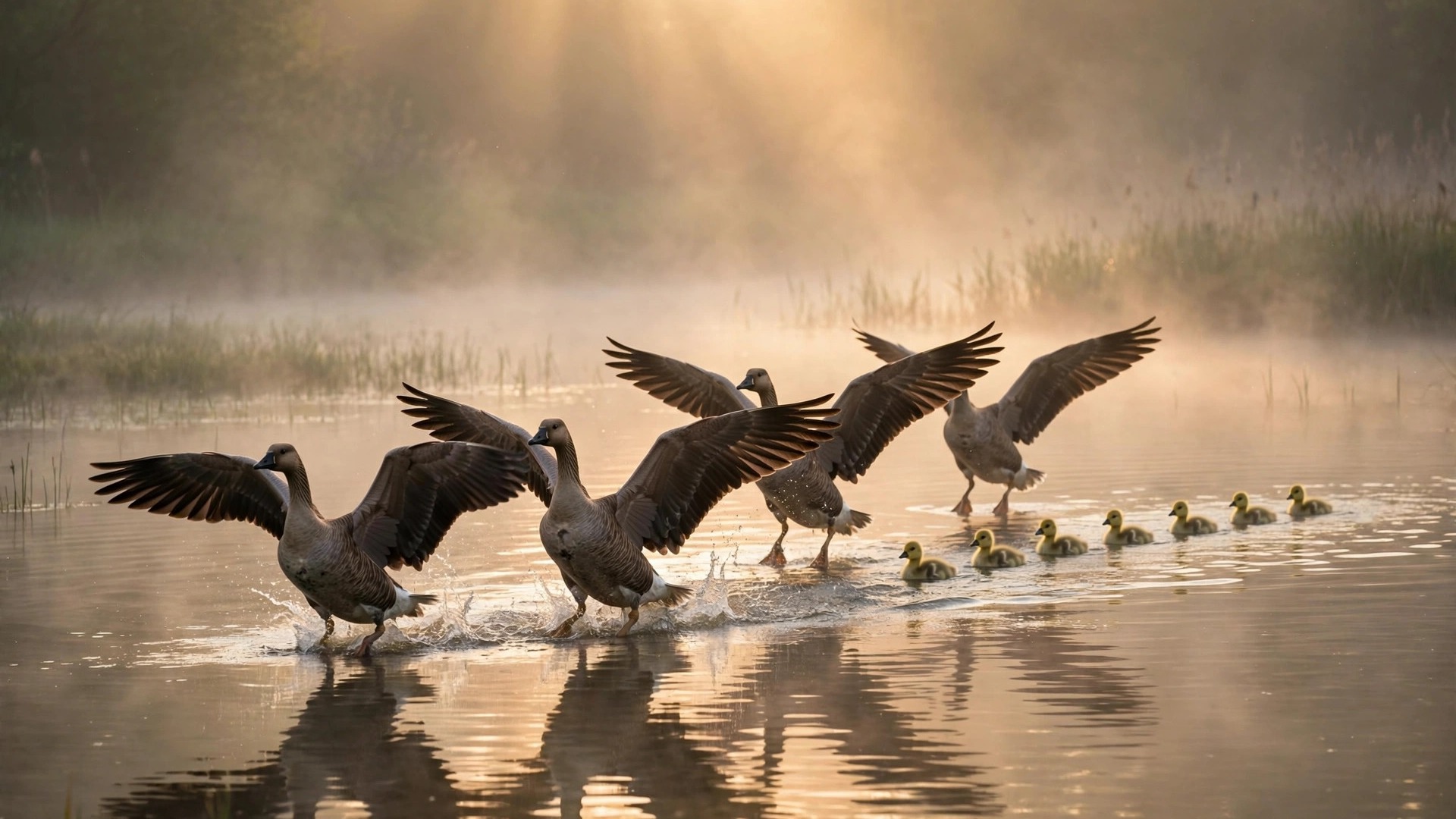
The goose in Hayat al-Hayawan: goslings swimming at birth, a mate guarding the nest, Solomon catching a thief by a feather, and the cry that warned…
Al-ilq (الإلق) is another Arabic name for the wolf in Hayat al-Hayawan: male ilq, female al-qa, plural al-qaw — and the female monkey borrowed the…
Al-ilfah (الإلفة) gets one line in Hayat al-Hayawan: the she-ghoul — or, some say, the she-wolf. Why 'companionship' names creatures that shun people.
Fifteen words preserve a dusty, mottled, long-necked water bird — and reveal how medieval dictionaries became bestiaries.
Al-afal means young camels in classical Arabic: calves of young she-camels. Their Hayat al-Hayawan entry is one sentence before 100 pages of sermons…
A black snake appeared in three dug graves — the same snake, three times. Plus two prophets, two loaves of bread, and charity that cheats death…
One leg, a human face, and a stare that kills. The aslah is the most terrifying snake in a 700-year-old book — leaping onto riders and burning all it…
The wolf and crow share one Arabic name: the cut-off ones. Plus Usayrim's astonishing story — Paradise without a single prayer. Wolf facts with a…
A falcon's cheek patch became the Arabic word for a woman's complexion — and a pigeon's neck. Falcon facts meet color words in a 3-line, 700-year-old…
The atlas wolf — a dusty-black wolf from a 700-year-old Arabic bestiary — became a poet's image of just rule and a grammarian's proof for pronouncing…
Sea turtle? Fish? Hedgehog? Cow? One Arabic word in a 700-year-old book meant all four — plus fish-skin boots for camel drivers. Meet the utum.
Shrike bird facts from a 700-year-old book: al-akhtab means both the shrike, the 'caller' songbird, and a striped donkey. One Arabic word, two…
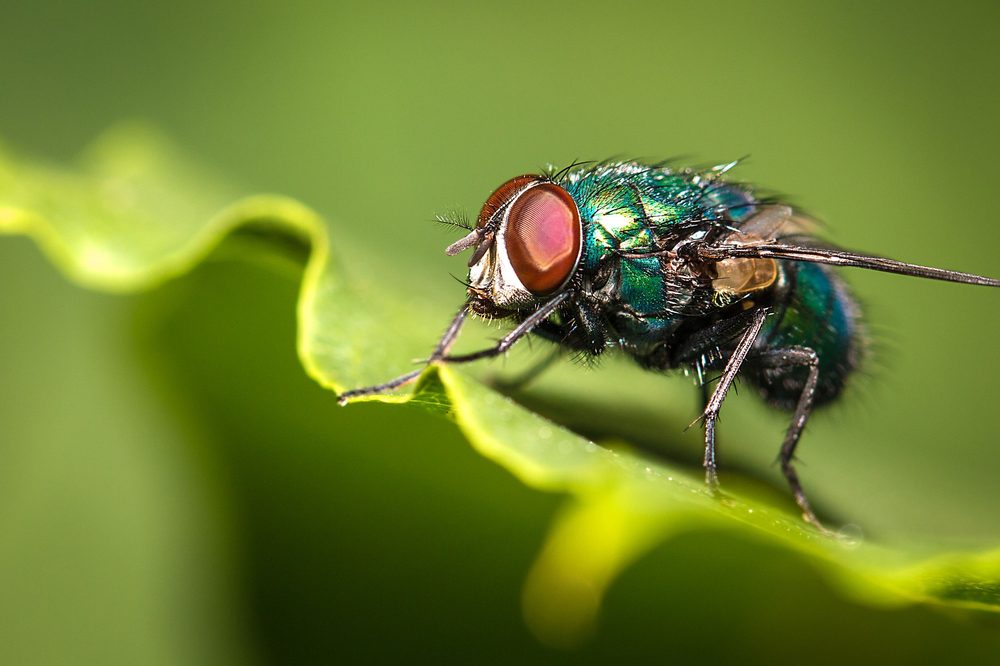
Green fly facts from a 700-year-old book: the akhaydar's whole entry is one line — a green fly the size of a common black fly. Why that single…
Want the animals themselves, A to Z? Open the Animal Encyclopedia →