Snake bite face swelling: the bite that changes your face
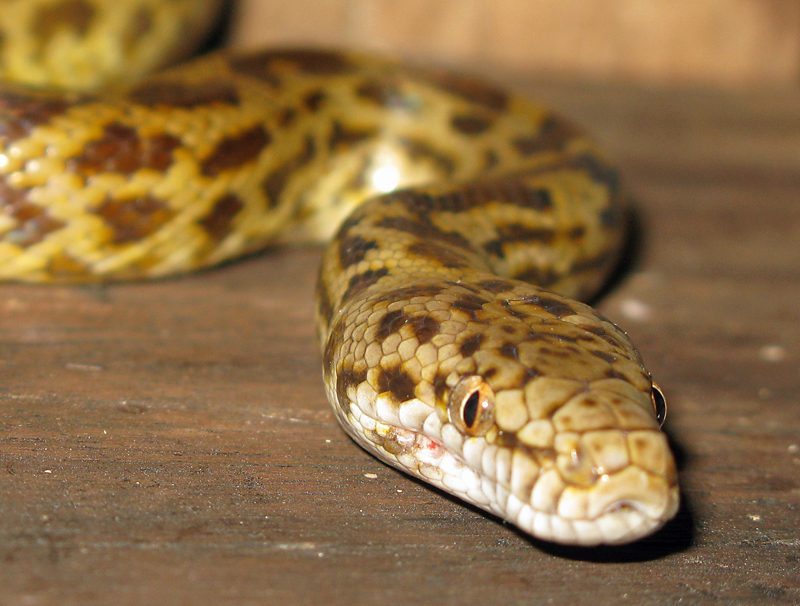
Among the venomous snake facts in Hayat al-Hayawan, the arbad’s is the strangest — a case of snake bite face swelling: its bite makes the victim’s face change — swelling and discoloring, the Arabic verb irbadda painting the picture in a single word. Hayat al-Hayawan lists it among the serpents with little fanfare and one chilling verse about a speckled snake in its den (al-wijar): the charmer’s breath cannot save the one it bites.
The medieval snake charmer who could not help
In the medieval world, the raqi — the charmer who blew over snakebites — was the emergency room. The entry also preserves a fine linguistic detail: the verse calls the victim al-salim, “the bitten one” — the patient. This verse says plainly: against the arbad, don’t bother calling him.
A snake verse recited at a graveside
Now here’s the part that stopped me cold when I read the full entry. That snake verse wasn’t just floating in the text as decoration. It was recited by a governor at a graveside. Abd al-Malik ibn Umayr recalled seeing Ziyad — the formidable governor — standing at the tomb of al-Mughira ibn Shu’ba, and Ziyad himself recited the snake verse as his eulogy. Picture it: a statesman at a grave, comparing the dead man to a speckled snake in its den — “beneath the stones lie resolve and determination, and a keen disputant” — against whom no charmer’s breath avails. It was praise, of a kind only that age could produce: you were so formidable, so impossible to counter, that you’re like the snake no charm can touch.
Ziyad added his own prose at the grave, too: “By GOD, you were severe in enmity toward those you opposed, and severe in brotherhood toward those you befriended.” Fierce even in memory.
One verse, two virtues
The lexicographer al-Jawhari then pauses — as he always does — to gloss a word in the verse: al-mi’laq, spelled with the plain undotted ’ayn (he’s specific about the spelling, distinguishing it from a similar word with ghayn). A man “of mi’laq” is one vehement in argument, and al-Jawhari even cites the pre-Islamic poet Muhalhil on the usage. But the entry preserves a textual wrinkle: Muhalhil’s original verse reads “resolve and generosity” (hazman wa-judan), while Ziyad at the graveside recited “resolve and determination” (hazman wa-’azman). Same verse, slightly different virtue. Misremembered in grief, or deliberately adapted for the occasion. We’ll never know.
Snake, poetry, politics, and grammar — all coiled together in half a page. That is the Hayat al-Hayawan method: an animal is never just an animal; it is a door into language, history, and the desert’s long memory. And sometimes, as here, the door opens onto a graveside, where a governor is comparing his dead friend to a snake, and meaning it as the highest compliment.
Frequently Asked Questions
-
What is snake bite face swelling in the arbad story?
The entry says the arbad’s bite changes the victim’s face through swelling and discoloration — the Arabic verb irbadda captures that transformation in a single word. A preserved verse adds that the breath of the raqi, the traditional charmer who treated snakebites, cannot save the person this snake has bitten.
-
Why did Governor Ziyad recite a snake verse at a grave?
Ziyad used the arbad verse as a eulogy for al-Mughira ibn Shu’ba. By comparing the dead man to a speckled snake in its den that no charm could counter, he praised him as forceful, determined, and impossible to defeat in argument — a compliment shaped by the values of its age.
-
What is the textual difference between Ziyad’s version and Muhalhil’s?
Muhalhil’s original verse reads “resolve and generosity,” while Ziyad at the graveside recited “resolve and determination.” The book preserves both readings without settling the matter: Ziyad may have misremembered the verse in grief, or deliberately adapted it to praise the qualities he associated with al-Mughira.

 The Snake You Can't Kill and Can't Keep 🐍
 The Snake That Turned Up in Three Graves 🐍
 The One-Legged Snake That Kills With a Look