The feared black snake in language and prayer
Some animals get an entry about their habits. The aswad salikh — the black shedding snake — gets an entry about the dead.
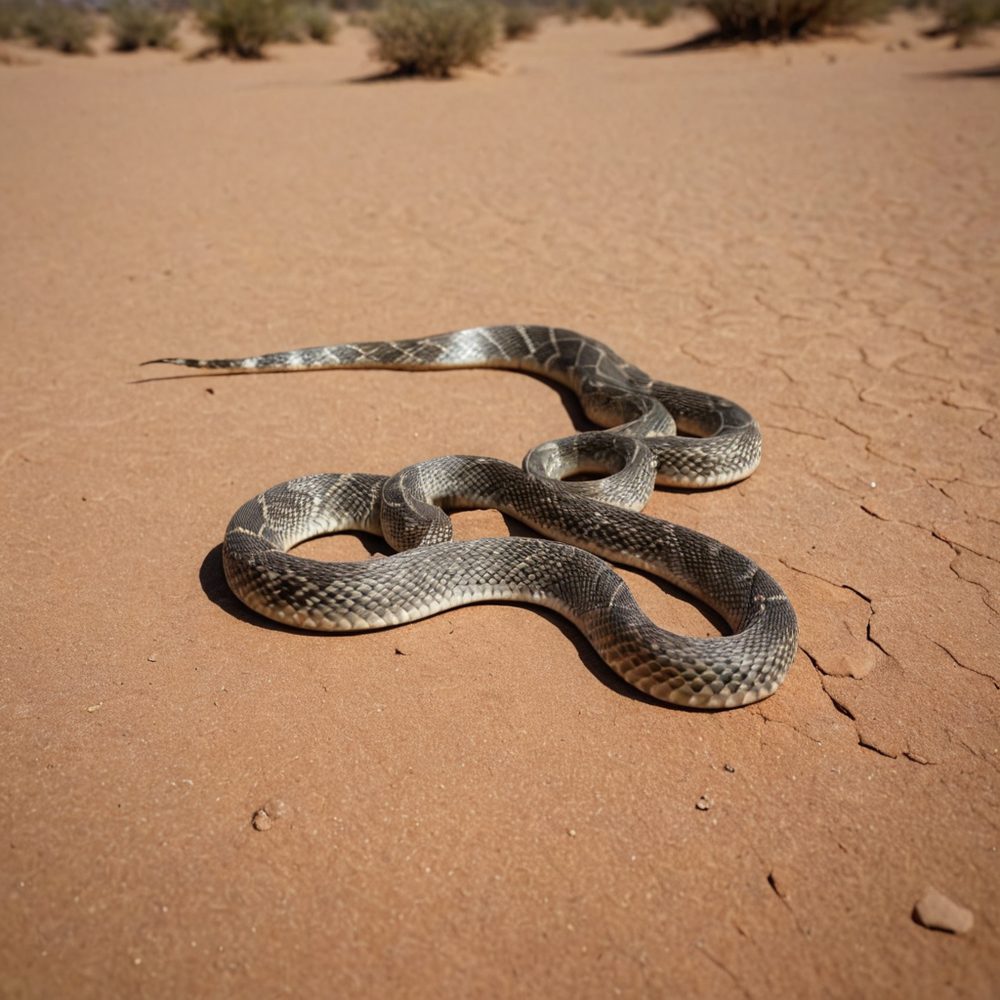
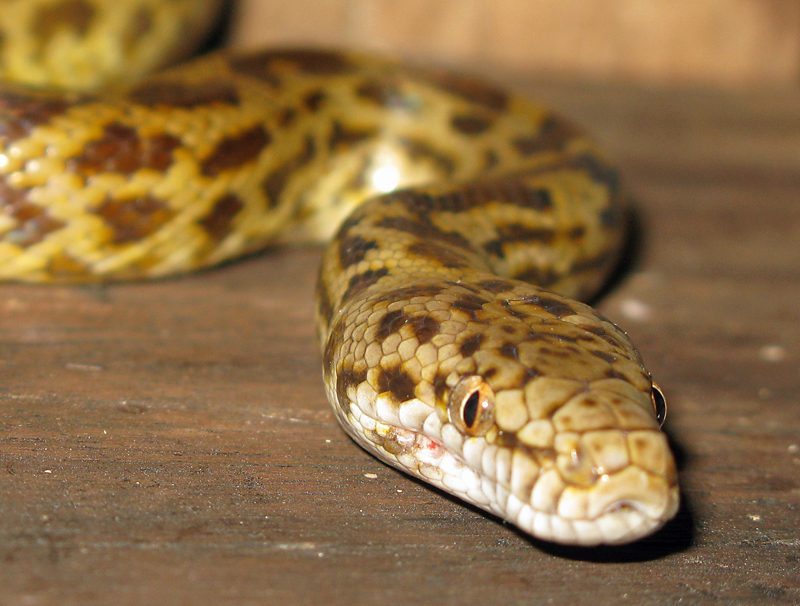
Al-Damiri starts with the natural history: the aswad salikh is a kind of uf'uwan, a giant serpent, intensely black, named for shedding its skin every year. Then he does what he always does — he hands the microphone to the grammarians. You say aswad salikh, never salikha for the female, on the authority of al-Asma'i and Abu Zayd; Ibn Zayd reported the feminine form, but the first is more famous. The plurals: asawid salikha, sawalik. A snake entry that doubles as a grammar lesson. Only in this book.
Then the hadiths, and they are not gentle. Abu Dawud, al-Nasa'i, and al-Hakim (who graded it authentic) report from Abdullah ibn Umar that the Prophet, when night fell on a journey, would say: “O earth — my Lord and your Lord is GOD. I seek refuge in GOD from your evil, from the evil of what is in you, from the evil of what was created in you, and from the evil of what crawls upon you. I seek refuge in GOD from the lion and the black one, from the snake and the scorpion, from the dweller of the town, and from the father and what was born.” The book glosses the last line: the town-dweller is the jinn; the father and what was born, Iblis and the devils. The black snake is named in the same breath as lions and devils — that tells you exactly how the desert felt about it.
Bukhari and Muslim add the harder edge: the Prophet commanded that the “two black ones” — the snake and the scorpion — be killed even during prayer. Nothing, not even worship, outranks them as a threat.
The poets got their turns too. Ibn Hisham quotes verses in Kitab al-Tijan where a sleepless eye is “kohled with the poison of the black one.” And Imam al-Shafi'i, in a line I can't get over, calls the eloquent poet himself a shedding black snake — “and poetry is his saliva and his spittle.” Imagine the greatest jurist of his age telling you that a smooth-talking poet is, zoologically speaking, a venomous reptile. The enmity of poets, he adds, is an incurable disease.
Three graves, two loaves and the moral turn
Then the stories.
A group of pilgrims loses a companion at a place called al-Sifah. They dig his grave. In the burial niche: a black shedding snake, stretched across the whole of it. They dig a second grave. Same snake, same position. A third. Same. They give up and go to Ibn Abbas, who tells them: “That is his deed, the one he used to do. Go and bury him in one of them — by GOD, if you dug up the whole earth, you would find the same.” Back home, the dead man's wife explains everything: he sold food, kept his family's daily share, then mixed in an equal measure of barley straw and sold the lot. A cheat, in other words — and his grave kept sprouting the same black snake. The book presents it as divine punishment for fraud; I present it as one of the eeriest images in medieval literature.
A gentler miracle follows. The Prophet, needing privacy, sits under a tree and takes off his sandals, slipping one back on — when a bird swoops down, snatches the other, and carries it skyward. Out of the sandal tumbles a black shedding snake. “This is an honor by which GOD honored me,” he says: “O GOD, I seek refuge in You from the evil of what walks on its belly, and from the evil of what walks on two legs, and from the evil of what walks on four.” Al-Damiri notes a sister-hadith lives under the crow's entry.
And then the entry's great pair: two stories, centuries apart, with the same skeleton. A man of the prophet Saleh's people — a troublemaker, the kind the community begged Saleh to pray against — goes out with two loaves of bread, eats one, gives one to a beggar. He comes home safe from the firewood run. Saleh tells him to untie his bundle: inside, a black shedding snake “like a tree trunk,” jaws clamped on a thick log. “By this it was repelled from you,” Saleh says — the charity. Then the second: travelers pass Jesus, son of Mary; he says one of them will die that day. Evening comes, they return with their firewood; he has the marked man untie his bundle — a black snake inside. What did the man do that day? Given part of a piece of bread to a poor man. “By it, it was repelled from you.”
Two prophets, two snakes, two loaves. The book's moral architecture is not subtle: charity buys you out of a death sentence, and the snake is the sentence.
From grammar to graves to two loaves of bread — all of it under a snake named for shedding its skin. The aswad salikh sloughs off its old body every year, and this entry sloughs off any single genre: dictionary, hadith collection, poetry anthology, ghost story, sermon.
Frequently Asked Questions
-
What happened when the pilgrims dug three graves?
Pilgrims found a black shedding snake stretched across the first burial niche for their dead companion. They dug a second and then a third grave, but the same snake appeared each time. Ibn Abbas said it represented the man’s habitual fraud and would be found wherever they tried to bury him.
-
How does charity change the ending in two snake stories?
In parallel accounts linked with the prophets Saleh and Jesus, a man gives part of his bread to someone in need. A deadly black snake is later found trapped inside his bundle of firewood instead of killing him. In both stories, the act of charity is identified as what repelled the danger.
-
Why is the snake called aswad salikh?
The article describes it as an intensely black giant serpent named for shedding its skin every year. Salikh refers to that shedding. The entry also preserves a grammatical debate about whether the feminine form should change, along with several plural forms cited by early language authorities.

 The Snake Whose Bite Changes Your Face 🐍
 The Snake You Can't Kill and Can't Keep 🐍
 The One-Legged Snake That Kills With a Look