Same page, next entry — and the book suddenly goes all business. After al-ilfah comes al-ilq: no ghouls, no promises, no poetry. Just grammar. One line that teaches you how Arabic names a wolf — and then, for reasons the book doesn't explain, drags a monkey into it.
Say It Right: 'Ilq,' Not 'Alq'
The entry opens with a pronunciation note: “with a kasra.” The hamza takes a kasra, so the word reads ilq (إلق), not alq. Same care as the goose entry, where al-Damiri spelled out the exact vowels of al-iwazz before telling you a single thing about the bird. Fourteenth-century scholars were exactly as fussy about pronunciation as any modern language nerd.
Three Words for One Wolf
Ilq is the wolf. The female is al-qa (القة). The plural of both is al-qaw (الق). Three forms, one line, no wasted ink. Arabic does this the way old English did with deer and hart and hind — the animal changes its name with its sex and number, and you were expected to know all three.
What I like is the confidence of it. No anecdote, no borrowed story — just the word in its three shapes, filed and done. After the ghost-story mood of the entry above it, al-ilq reads like someone opening a window.
The Monkey Clause
Then the second half of the line goes somewhere I didn't see coming: “And sometimes they say al-aliqah for the female monkey — but of the male monkey you do not say al-q; rather qird and rubbah.”
The feminine form, al-aliqah, drifts across species and lands on the monkey. But there's a rule, stated like a judge's ruling: the male monkey never gets called “al-q.” He stays qird or rubbah — two old Arabic words for monkey and ape — while his mate borrows the wolf's feminine name.
Why? The book doesn't say. Maybe the word-collectors just wrote down what they heard desert people saying — rules, exceptions, and all. Either way, it's the strangest half-sentence on the page, and it's why this entry will stay in my memory long after the longer ones fade.
Where's the Real Wolf?
One honest note to close: this isn't the wolf's real entry. The full one — al-dhi'b (الذئب) — comes later, in the dhal chapter, right where the ilfah entry promised the she-wolf. This is a lexical sidebar: a word filed under the alphabet.
And it isn't the book's first wolf alias. A hundred pages back, the wolf showed up as half of al-asraman, paired with the crow — “the cut-off ones,” named for keeping away from people. On this same page, ilfah may name the she-wolf. Here, ilq names the wolf outright. The book's wolf vocabulary is scattered across the alphabet like footprints — and we haven't even reached the main entry yet.
Frequently Asked Questions
How do you pronounce al-ilq?
With a kasra under the hamza: “ilq” (إلق), not “alq.” The entry opens with this pronunciation note — the same care al-Damiri showed with the goose entry's vowels. Getting the sounds right was part of the natural history.
What's the difference between ilq and dhi'b?
Both mean wolf; ilq is the older, rarer word, dhi'b the common one. This entry is a lexical note — the full wolf entry under al-dhi'b (الذئب) comes later, in the dhal chapter. Al-ilq is the word's dictionary card; al-dhi'b will be the animal's biography.
Why is the male monkey never called “al-q”?
The book states the rule without explaining it: the feminine al-aliqah may name the female monkey, but the male monkey is only qird or rubbah. Medieval lexicographers recorded usage as they heard it — the asymmetry is reported, not justified.

 The Fox Came Back for Seconds 🦊🍗
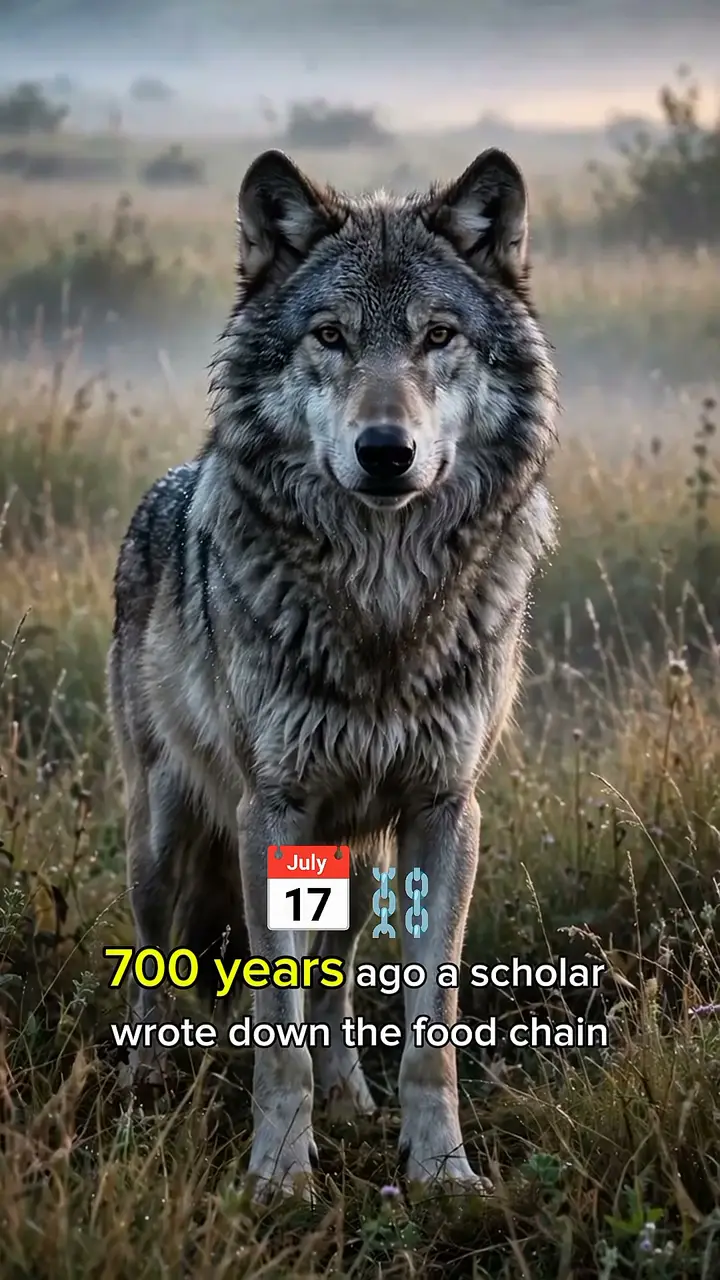 A Wolf Starts This 700-Year-Old Chain. A Fly Ends It. ⛓️🐺
 The Sneeze That Put a Cat on Noah’s Ark 🦁🐱